
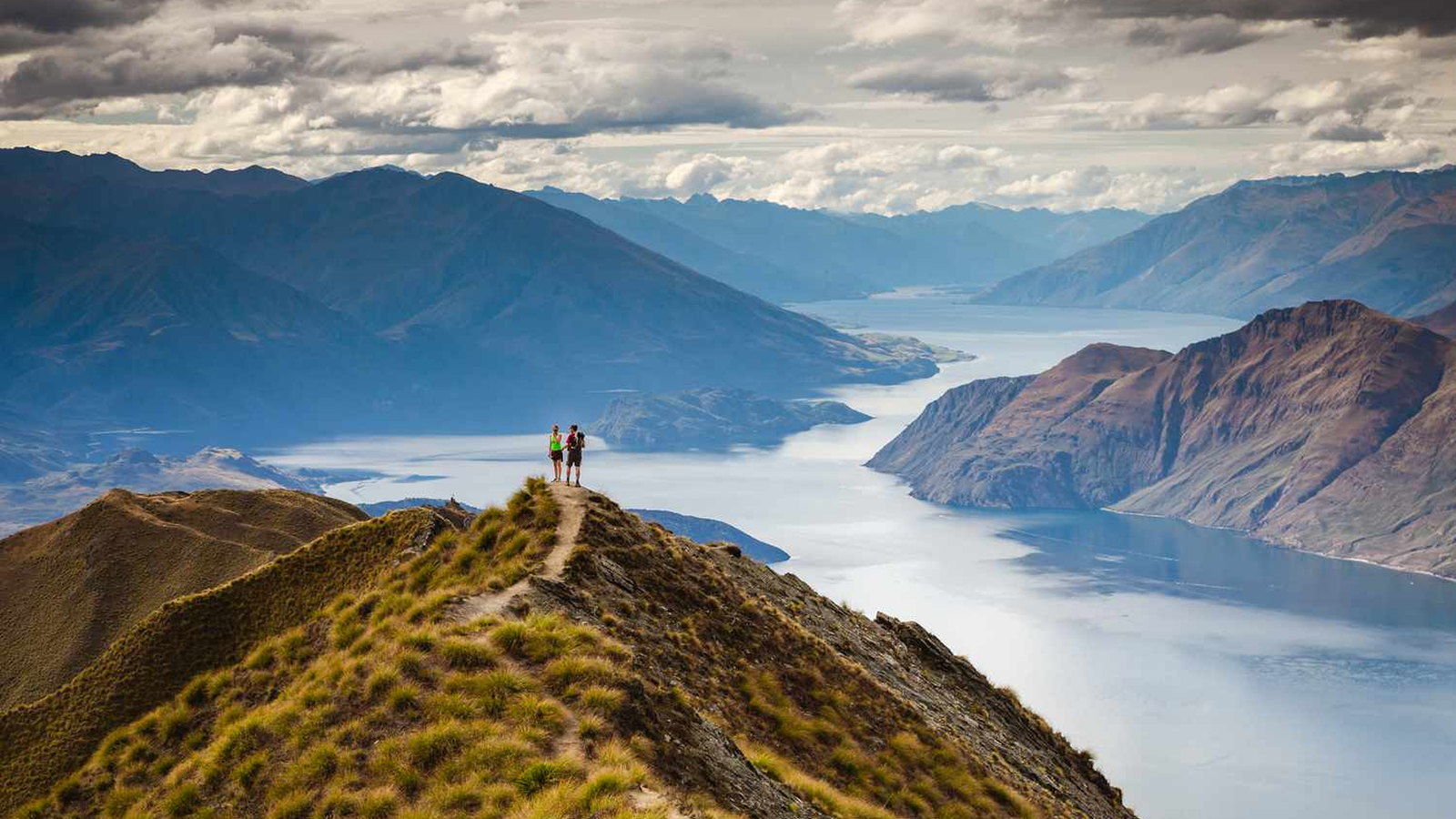
New Zealand is a destination where dramatic mountains, turquoise lakes, rugged coastlines, green countryside, and vibrant cities come together in a relatively compact country.
The North Island and South Island each offer a very different travel experience. The North Island is known for volcanic landscapes, Māori culture, geothermal areas, beaches, and major cities, while the South Island is famous for alpine scenery, national parks, fjords, glaciers, and spectacular road trips.
If you’re planning your first visit, these are 15 of the best places to include in your New Zealand travel plans.
1. Queenstown
Queenstown is one of New Zealand’s most popular destinations and an excellent base for exploring the South Island.
The town sits beside Lake Wakatipu and is surrounded by mountains, creating spectacular scenery in almost every direction.
Queenstown is particularly famous for adventure activities. You can try bungee jumping, jet boating, skydiving, mountain biking, hiking, and skiing depending on the season.
If you prefer a slower trip, take a cruise on Lake Wakatipu, explore the waterfront, or enjoy the restaurants and cafés around town.
Best for: Adventure, mountains, nightlife, road trips, and outdoor activities.
2. Milford Sound
Milford Sound is one of New Zealand’s most iconic natural attractions.
Located within Fiordland National Park, the fjord is surrounded by steep mountains, dramatic cliffs, and waterfalls.
A boat cruise is one of the most popular ways to experience the area. On a rainy day, temporary waterfalls can appear along the cliffs, creating an even more dramatic landscape.
Milford Sound is remote, so visiting usually requires some planning. It can be reached from Te Anau or Queenstown by road, tour, or scenic flight.
Best for: Nature, photography, scenic cruises, and dramatic landscapes.
3. Aoraki / Mount Cook National Park
Aoraki / Mount Cook is home to New Zealand’s highest mountain.
The surrounding national park features glaciers, alpine valleys, turquoise lakes, and some of the country’s most spectacular hiking trails.
The Hooker Valley Track is one of the best-known walks in the area and offers impressive views of the surrounding mountains.
The nearby village is small, making this destination more about nature than nightlife or shopping.
Best for: Hiking, photography, mountains, and scenic landscapes.
4. Lake Tekapo
Lake Tekapo is famous for its turquoise-blue water and spectacular mountain backdrop.
The small Church of the Good Shepherd beside the lake has become one of New Zealand’s most photographed landmarks.
Tekapo is also part of the Aoraki Mackenzie International Dark Sky Reserve, making it a popular destination for stargazing.
Visit during the day for the scenery and stay overnight if you want to experience the night sky.
Best for: Stargazing, photography, scenic landscapes, and couples.
5. Wanaka
Wanaka offers a more relaxed alternative to Queenstown.
The town sits beside Lake Wānaka and is surrounded by mountains, hiking trails, and outdoor activities.
One of the area’s most famous sights is the Wānaka Tree, which stands in the lake near the shoreline.
Beyond photography, you can hike, kayak, cycle, ski, or simply enjoy the lake views.
Wanaka works particularly well as part of a South Island road trip.
Best for: Hiking, nature, photography, and relaxed travel.
6. Christchurch
Christchurch is often used as a starting point for South Island road trips, but the city is worth exploring on its own.
The city has undergone significant changes over the years and now combines modern architecture, gardens, cafés, restaurants, and cultural attractions.
The Christchurch Botanic Gardens are particularly pleasant for a relaxed walk.
The city also provides convenient access to destinations such as Arthur’s Pass, Kaikōura, and Aoraki / Mount Cook.
Best for: City breaks, road trips, gardens, and exploring the South Island.
7. Kaikōura
Kaikōura is a coastal destination known for its marine wildlife.
The waters around Kaikōura are home to dolphins, seals, whales, and seabirds, making the area particularly popular for wildlife experiences.
Whale-watching tours provide an opportunity to see marine life offshore, while the coastline itself is beautiful for walking and photography.
Kaikōura is located between Christchurch and Picton, making it a convenient stop on a South Island road trip.
Best for: Wildlife, coastal scenery, photography, and marine experiences.
8. Abel Tasman National Park
Abel Tasman National Park is known for golden beaches, clear water, coastal forests, and walking trails.
Unlike some of the mountainous destinations farther south, Abel Tasman offers a more relaxed coastal experience.
You can explore the park by hiking, kayaking, or taking a water taxi between different points along the coast.
The Abel Tasman Coast Track is one of New Zealand’s popular multi-day walking routes.
Best for: Beaches, hiking, kayaking, and nature.
9. Rotorua
Rotorua is one of the best places to experience New Zealand’s geothermal landscapes and Māori culture.
The region is known for bubbling mud pools, geysers, volcanic activity, hot springs, and geothermal valleys.
Rotorua also offers opportunities to learn about Māori traditions, food, history, and cultural practices.
The city is surrounded by lakes and forests, so there are plenty of outdoor activities beyond geothermal attractions.
Best for: Geothermal landscapes, culture, outdoor activities, and families.
10. Auckland
Auckland is New Zealand’s largest urban area and often the first stop for international visitors.
The city sits between two harbors and offers a mixture of restaurants, museums, shopping districts, waterfront areas, and nearby islands.
You can explore the city before taking day trips to places such as Waiheke Island.
Auckland is also a useful starting point for exploring the North Island.
Best for: City breaks, food, shopping, beaches, and first-time visitors.
11. Wellington
Wellington is New Zealand’s capital and sits at the southern end of the North Island.
The city has a compact center, waterfront walks, cafés, restaurants, museums, and a lively cultural scene.
Te Papa Tongarewa, the national museum of New Zealand, is one of the city’s major attractions.
Wellington is also an important transportation hub for travelers moving between the North and South Islands.
Best for: Culture, museums, food, city breaks, and travelers crossing between the islands.
12. Taupō
Taupō is located beside the enormous Lake Taupō, which was created by a massive volcanic eruption.
The lake dominates the region and provides opportunities for boating, fishing, kayaking, and scenic walks.
Nearby attractions include Huka Falls, where the Waikato River moves through a narrow section of rock with considerable force.
Taupō is also a convenient base for exploring the central North Island.
Best for: Lakes, nature, outdoor activities, and road trips.
13. Bay of Islands
The Bay of Islands is one of the North Island’s most beautiful coastal regions.
The area contains numerous islands, beaches, bays, and historic sites.
Paihia is a popular base for exploring the region, while Russell offers a more historic atmosphere.
Boat trips provide opportunities to explore the coastline and surrounding islands.
The region is particularly attractive during warmer months when conditions are suitable for swimming, kayaking, and sailing.
Best for: Beaches, boating, history, and coastal travel.
14. Franz Josef and the West Coast
The West Coast of the South Island offers some of New Zealand’s most rugged scenery.
Franz Josef is known for its glacier and its surrounding mountains, forests, and rivers.
The region is particularly impressive for travelers interested in dramatic natural landscapes.
Weather conditions can influence glacier activities and scenic flights, so flexibility is useful when planning your visit.
The West Coast also works well as part of a road trip between Christchurch, Wanaka, and the northern South Island.
Best for: Glaciers, mountains, road trips, and adventure.
15. Tongariro National Park
Tongariro National Park is one of the most spectacular destinations on New Zealand’s North Island.
The park is home to volcanic mountains and dramatic alpine landscapes.
The Tongariro Alpine Crossing is one of the country’s best-known day hikes, passing volcanic terrain, emerald-colored lakes, and mountain landscapes.
Conditions can change quickly, particularly at higher elevations, so preparation and checking current conditions are essential.
Best for: Hiking, volcanoes, adventure, and mountain scenery.
North Island or South Island?
If you only have a limited amount of time, choosing between the two islands can make your trip easier.
Choose the North Island for:
- Māori culture
- Geothermal attractions
- Auckland
- Wellington
- Beaches
- Volcanic landscapes
- Food and wine
Choose the South Island for:
- Mountains
- Lakes
- Fjords
- Glaciers
- Hiking
- Wildlife
- Scenic road trips
For a first trip of around two weeks, you can visit parts of both islands, but you’ll need to plan your transportation carefully.
If you have less than 10 days, focusing on one island can provide a more relaxed experience.
Best Time to Visit New Zealand
New Zealand can be visited throughout the year.
Summer, from December to February, is popular for hiking, beaches, road trips, and outdoor activities.
Autumn, from March to May, brings changing colors and generally comfortable conditions for sightseeing.
Winter, from June to August, is ideal for skiing and snow-covered mountain landscapes.
Spring, from September to November, brings fresh greenery, flowers, and changing mountain conditions.
Your choice should depend on the activities and regions you want to experience.
How Long Do You Need in New Zealand?
For a first trip, around 10 to 14 days provides enough time to explore several major destinations.
A longer trip of three weeks or more allows you to slow down and spend more time in places such as Queenstown, Wanaka, Rotorua, the West Coast, and the Northland.
New Zealand is particularly well suited to road trips, so don’t underestimate the value of leaving extra time between major destinations.
Some of the best experiences happen during the journey.
Final Thoughts
New Zealand is a destination where the landscape is often the main attraction.
From the mountains surrounding Queenstown and Aoraki / Mount Cook to the beaches of Abel Tasman and the geothermal landscapes of Rotorua, every region offers something different.
You don’t need to visit all 15 destinations on one trip.
For a first visit, choose a route based on your interests. Travelers looking for mountains and adventure may prefer the South Island, while those interested in culture, geothermal landscapes, and beaches may enjoy the North Island.
Whatever route you choose, allow enough time to slow down, explore the scenery, and enjoy the journey between destinations.