
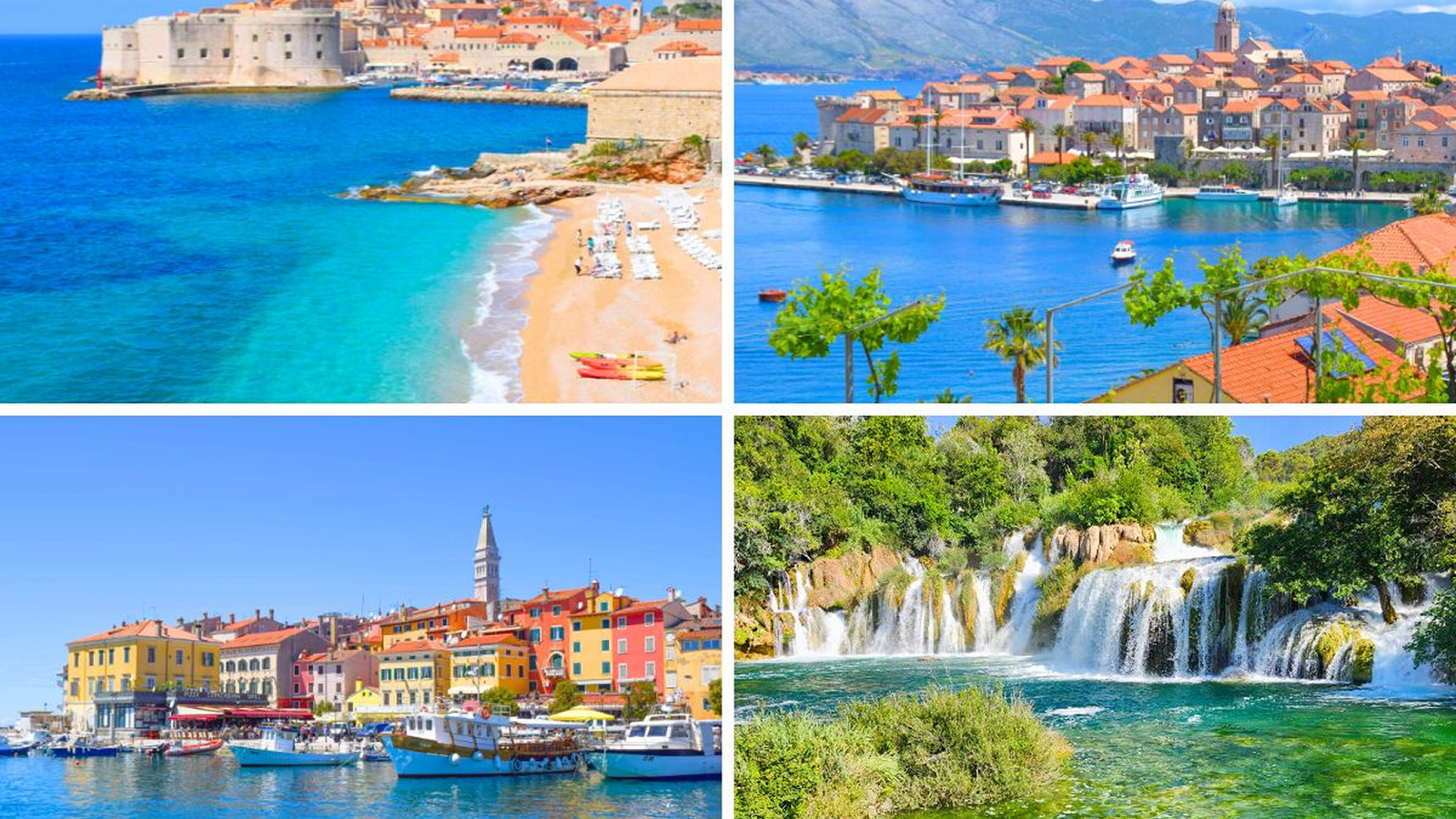
Croatia is one of Europe’s most diverse destinations, combining a spectacular Adriatic coastline with historic cities, beautiful islands, national parks and charming Mediterranean towns.
From the medieval streets of Dubrovnik and the ancient heart of Split to the turquoise lakes of Plitvice and the peaceful landscapes of Istria, there are many different ways to experience the country.
The Croatian coast is the country’s biggest attraction, but travelers who venture inland will find forests, waterfalls, mountains, vineyards and historic towns that offer a completely different perspective.
Whether you’re planning a beach holiday, European city break, island-hopping adventure or road trip, these are 15 of the best places to visit in Croatia.
1. Dubrovnik
Dubrovnik is one of Croatia’s most recognizable destinations.
Known for its historic Old Town, stone walls and terracotta rooftops, the city sits dramatically above the Adriatic Sea.
Spend time walking through the narrow streets of the Old Town before exploring the historic city walls. From the walls, you’ll have views across the rooftops and surrounding coastline.
You can also take a cable car toward Mount Srđ for a panoramic view of Dubrovnik.
Don’t miss: Dubrovnik Old Town, the city walls, Stradun and the view from Mount Srđ.
2. Split
Split combines ancient history with a lively Mediterranean atmosphere.
At the center of the city is Diocletian’s Palace, a historic complex that has become an integral part of the modern city.
Explore the palace streets, visit historic squares and stop at a café before walking along the Riva waterfront.
Split is also one of the most useful bases for exploring Croatia’s Dalmatian islands.
From here, you can arrange trips to destinations such as Hvar, Brač and Šolta.
Best for: History, coastal scenery, food and island excursions.
3. Hvar Island
Hvar is one of Croatia’s most popular islands.
The island combines historic architecture, beautiful beaches, clear Adriatic water and a lively summer atmosphere.
Hvar Town is the main center, with a waterfront promenade, historic streets and viewpoints overlooking the surrounding islands.
Beyond Hvar Town, the island becomes quieter, with small villages, vineyards, coves and scenic roads.
Hvar works particularly well for travelers who want to combine beach time with culture and nightlife.
4. Plitvice Lakes National Park
Plitvice Lakes is one of Croatia’s most spectacular natural destinations.
The national park contains a series of interconnected lakes surrounded by forests and waterfalls.
Wooden walkways allow visitors to explore different sections of the park while staying close to the water.
The landscape changes throughout the year, giving the park a different character in spring, summer and autumn.
If you’re planning a Croatia road trip, Plitvice Lakes is an excellent addition to a coastal itinerary.
Best for: Nature, hiking and photography.
5. Zadar
Zadar is a historic coastal city in northern Dalmatia.
Its Old Town contains Roman and medieval remains alongside cafés, restaurants and lively public spaces.
The waterfront is home to the famous Sea Organ, which uses the movement of the sea to create sound.
Nearby, the Sun Salutation creates a colorful light display after sunset.
Zadar is also well positioned for exploring nearby islands and national parks.
6. Zagreb
Croatia’s capital offers a very different experience from the country’s coastal destinations.
Zagreb combines historic architecture, museums, markets, cafés and lively public squares.
Explore the Upper Town, walk through the historic streets and visit local markets before discovering the city’s modern neighborhoods.
Zagreb is especially useful as the beginning or end of a longer Croatia itinerary.
If you have enough time, spending one or two days in the capital can give your trip a more complete view of the country.
7. Rovinj
Rovinj is one of the most beautiful towns on Croatia’s Istrian Peninsula.
The historic center sits on a small peninsula overlooking the Adriatic.
Colorful buildings, narrow cobblestone streets and small waterfront restaurants give Rovinj a distinctly Mediterranean character.
The surrounding Istrian region is also known for vineyards, olive oil and local food.
Rovinj is a great choice for travelers who want a slower-paced coastal experience away from some of the larger Dalmatian destinations.
8. Korčula Island
Korčula is known for its historic Old Town, stone buildings and beautiful coastal scenery.
Korčula Town has a compact historic center that is easy to explore on foot.
Outside the town, the island offers vineyards, beaches, small villages and scenic coastal roads.
The island can be visited as part of an island-hopping itinerary or as a longer stay for travelers looking for a quieter Adriatic experience.
Best for: History, wine, beaches and relaxed island travel.
9. Brač Island
Brač is one of the most accessible islands from Split and is particularly famous for Zlatni Rat, the distinctive beach near Bol.
The island offers more than beaches, however.
You can explore small villages, hike through the interior, visit coastal viewpoints and enjoy traditional island food.
Brač is a good option for travelers who want to experience island life without traveling too far from mainland Croatia.
10. Pula
Pula is located on the Istrian Peninsula and is best known for its impressive Roman heritage.
The city’s most famous landmark is the Pula Arena, a remarkably preserved Roman amphitheater.
Pula also provides easy access to beaches and the surrounding Istrian coastline.
Its combination of Roman history, Mediterranean scenery and nearby nature makes it a useful base for exploring southern Istria.
11. Šibenik
Šibenik is a historic coastal city located along the Dalmatian Coast.
Its Old Town is built around narrow stone streets, stairways and historic buildings.
One of its most important landmarks is the Cathedral of St. James, a remarkable example of Renaissance architecture.
Šibenik is also conveniently located for visiting nearby natural attractions, including Krka National Park.
For travelers looking for a less obvious alternative to Split or Dubrovnik, Šibenik offers a more relaxed coastal experience.
12. Trogir
Trogir is a small historic town near Split.
Its old center is located on an island connected to the mainland by bridges and is known for its medieval streets, stone buildings and historic architecture.
Because of its compact size, Trogir can be explored relatively easily in a day.
Its location also makes it convenient for travelers staying in Split or exploring the surrounding Dalmatian Coast.
Best for: History, architecture and short day trips.
13. Makarska
Makarska sits along the Dalmatian Coast beneath the dramatic Biokovo mountain range.
The combination of mountains, beaches and clear Adriatic water gives the area a particularly scenic setting.
The town has a waterfront promenade, restaurants and access to nearby beaches.
Makarska can also serve as a base for exploring the central Dalmatian coastline.
For travelers who want mountain scenery alongside a traditional beach destination, it offers a strong combination.
14. Istria
Istria is a region rather than a single city, but it deserves a place on any Croatia itinerary focused on food, wine and countryside.
The peninsula contains hilltop towns, vineyards, olive groves and coastal communities.
Rovinj, Pula and Motovun are among the places worth including.
Istria is particularly well known for its culinary traditions, including truffles, seafood and olive oil.
A road trip through the region allows you to experience both the coastline and the inland countryside.
15. Krka National Park
Krka National Park offers another opportunity to experience Croatia’s waterfalls and natural landscapes.
The park is characterized by rivers, waterfalls, forests and scenic walking routes.
It is particularly convenient for travelers exploring the Dalmatian Coast because it can be combined with destinations such as Šibenik and Split.
If you’re already visiting Croatia’s coastal cities, adding Krka provides a chance to experience the country’s inland natural beauty.
Best Places to Visit in Croatia for Different Travelers
| Traveler Type | Places to Consider |
|---|---|
| First-time visitors | Dubrovnik, Split, Plitvice Lakes |
| Beaches | Hvar, Brač, Makarska |
| History | Dubrovnik, Split, Trogir, Pula |
| Nature | Plitvice Lakes, Krka, Istria |
| Food & wine | Istria, Rovinj, Korčula |
| Island hopping | Hvar, Brač, Korčula |
| Couples | Dubrovnik, Hvar, Rovinj |
| Road trips | Istria, Dalmatian Coast, Plitvice |
| City breaks | Zagreb, Split, Dubrovnik |
| Photography | Dubrovnik, Plitvice, Hvar, Rovinj |
How Many Days Do You Need in Croatia?
For a first trip, 7 to 10 days is a practical starting point.
A 10-day route could include:
Days 1–2: Zagreb
Day 3: Plitvice Lakes
Day 4: Zadar
Days 5–6: Split
Day 7: Hvar
Days 8–9: Dubrovnik
Day 10: Departure
With two weeks or more, you can slow down the itinerary and add destinations such as Rovinj, Pula, Korčula, Brač, Šibenik or Istria.
Best Time to Visit Croatia
The ideal season depends on the type of trip you’re planning.
May–June: Good for sightseeing, road trips, hiking and early-season coastal travel.
July–August: Peak summer season, particularly suitable for beaches, swimming and island hopping.
September: A useful period for combining beaches, sightseeing and outdoor activities.
October: Good for food, wine, countryside exploration and quieter sightseeing.
For more detailed planning, read our guide to the best time to visit Croatia.
Final Thoughts
Croatia offers an impressive variety of destinations despite its relatively compact size.
You can walk through the historic streets of Dubrovnik, explore ancient architecture in Split, relax on Hvar, hike around Plitvice Lakes, discover the food and wine of Istria or explore quieter coastal towns such as Rovinj and Šibenik.
For a first trip, combining Dubrovnik, Split, one or two islands and Plitvice Lakes gives you a strong introduction to Croatia.
If you have more time, adding Istria or additional Adriatic islands can turn the journey into a much more extensive exploration of the country.