
Croatian cuisine reflects the country’s geography and history. Along the Adriatic coast, you’ll find fresh seafood, olive oil, grilled fish and Mediterranean flavors, while inland regions are known for hearty meat dishes, pastries and traditional comfort food.
The country’s different regions also have their own specialties. Dalmatia is known for seafood and slow-cooked dishes, Istria is famous for truffles and pasta, while northern Croatia has its own rich tradition of pastries and baked dishes.
Food is an important part of experiencing Croatia, and trying regional specialties can add another dimension to a trip.
Here are 15 Croatian foods worth trying during your travels.
1. Black Risotto — Crni Rižot
Black risotto, known locally as crni rižot, is one of the most recognizable dishes along Croatia’s Adriatic coast.
Its distinctive dark color comes from cuttlefish or squid ink. The dish is usually prepared with seafood, rice, garlic, olive oil and other Mediterranean ingredients.
The flavor is rich and savory, with the seafood providing much of its character.
You’ll commonly find black risotto in coastal restaurants, particularly in Dalmatia.
Best place to try: Dalmatian coastal towns such as Split and Dubrovnik.
2. Peka
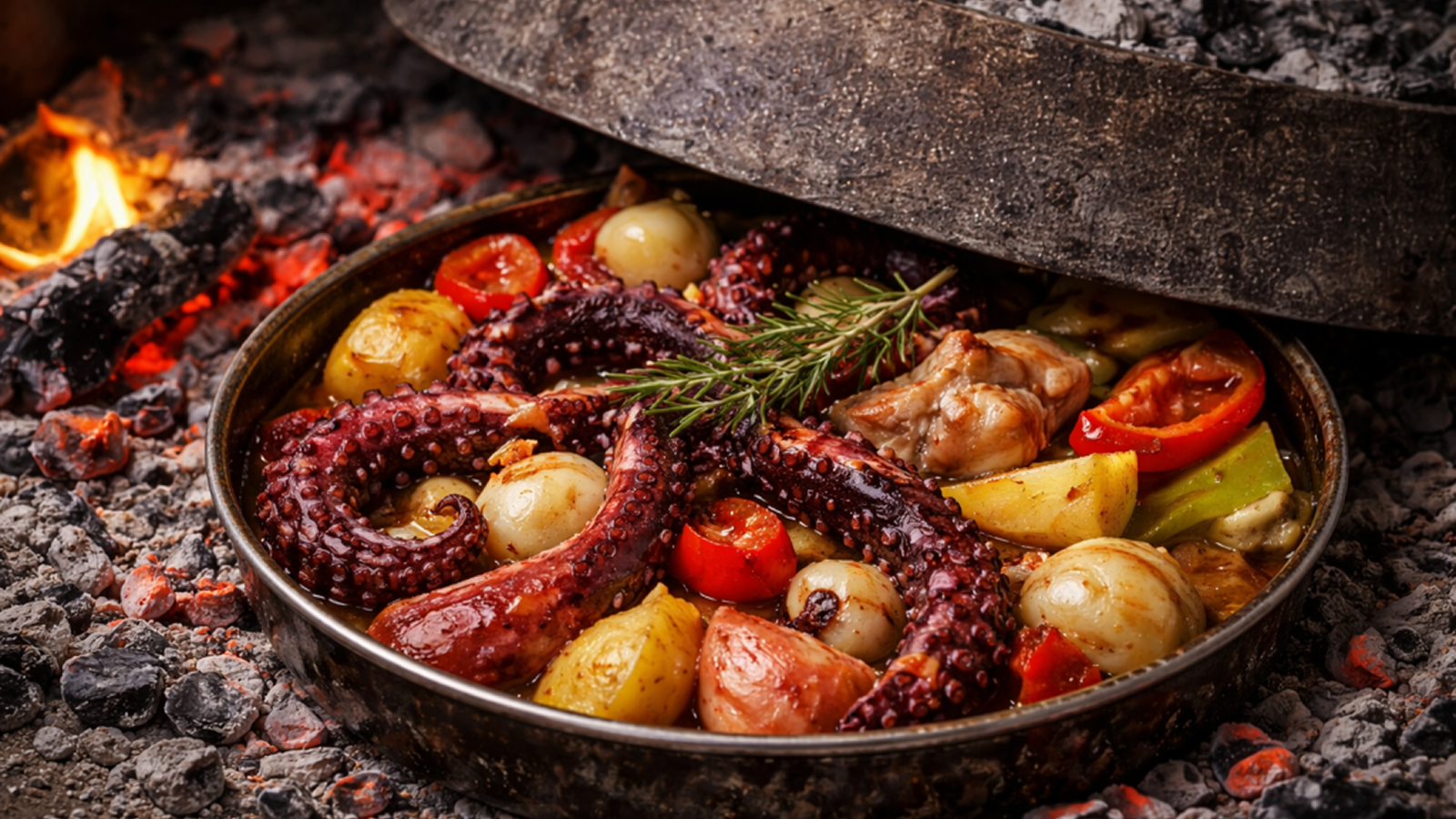
Peka is a traditional Croatian cooking method rather than one specific ingredient-based dish.
Meat, seafood or vegetables are placed beneath a bell-shaped dome and slow-cooked over or beneath hot embers.
The slow cooking allows the ingredients to become tender while developing deep flavors.
Depending on the region and restaurant, peka can include lamb, veal, chicken, octopus or vegetables.
Because preparation takes time, restaurants may require advance ordering.
Travel tip: Ask about peka before ordering because it is often prepared several hours in advance.
3. Pašticada
Pašticada is a traditional Dalmatian beef dish.
Beef is marinated and then slowly cooked with ingredients such as vegetables, wine and aromatic herbs.
The result is a rich and tender dish that is usually served with homemade-style gnocchi.
It is particularly associated with Dalmatian cuisine and is worth seeking out if you want to experience a traditional Croatian meal beyond seafood.
4. Brudet
Brudet is a traditional Adriatic fish stew.
Different varieties of fish and seafood are cooked slowly with tomatoes, onions, garlic, olive oil and other ingredients.
Recipes vary from one coastal area to another, so the dish can taste quite different depending on where you try it.
It is generally served with a side such as polenta.
For seafood lovers, brudet provides an excellent introduction to Croatia’s coastal cooking traditions.
5. Grilled Adriatic Fish
Simple grilled fish is one of the best ways to experience Croatia’s Mediterranean side.
Fresh fish is commonly prepared with olive oil, herbs and simple seasoning before being grilled.
Depending on the restaurant and season, you may find varieties such as sea bass, sea bream and other local catches.
The preparation is intentionally simple, allowing the flavor of the fish to remain the focus.
Best paired with: Local vegetables, salad, potatoes and Croatian olive oil.
6. Škampi na Buzaru
This traditional seafood preparation features Adriatic scampi cooked with garlic, olive oil, wine and herbs.
The sauce is flavorful without overwhelming the seafood.
It is particularly associated with the Croatian coast and can be found in many seafood-focused restaurants.
Order some fresh bread alongside it so you can enjoy the flavorful sauce.
7. Octopus Salad
Octopus salad is a popular choice along the Croatian coast.
Tender octopus is typically combined with potatoes, onions, parsley, olive oil and lemon.
The result is light, fresh and particularly suited to warm Mediterranean weather.
It makes an excellent starter before a larger seafood meal.
8. Fuži with Truffles
If you travel through Istria, look for fuži, a traditional type of Istrian pasta.
It is often served with a truffle-based sauce, reflecting Istria’s reputation for truffles.
The pasta is typically handmade and has a distinctive shape that holds onto the sauce.
This is one of the dishes that demonstrates how Croatian cuisine can change significantly between regions.
Best place to try: Istria, particularly around Motovun and other inland towns.
9. Istrian Truffles
Istria is one of Croatia’s best-known regions for truffles.
Truffles are incorporated into pasta, sauces, eggs, meat dishes and other regional specialties.
You can find restaurants across Istria offering seasonal dishes featuring local truffles.
If you’re traveling through the region, a truffle-focused meal can be one of the most memorable culinary experiences of your trip.
10. Štrukli
Štrukli is a traditional pastry and comfort food associated with northern Croatia, particularly the Zagreb and Zagorje areas.
It can be prepared in different ways and commonly features dough combined with fresh cheese.
Depending on the preparation, it can be baked or cooked and served as either a savory or sweet dish.
For travelers spending time in Zagreb, štrukli is worth adding to your food itinerary.
11. Soparnik
Soparnik is a traditional Dalmatian savory pie made with thin dough and a filling centered around Swiss chard.
The dish is particularly associated with the area around Poljica near Split.
It is simple, rustic and representative of traditional Dalmatian cooking.
If you see soparnik on a menu or at a local food market, it is worth trying as a lighter alternative to some of Croatia’s richer meat dishes.
12. Fritule
Fritule are small fried pastries that are particularly popular along the Croatian coast.
They are often prepared with ingredients such as raisins, citrus zest and other flavorings before being fried and finished with powdered sugar.
They are especially associated with festive and holiday periods, although you may find them in bakeries and restaurants throughout coastal Croatia.
They make a simple sweet snack after a seafood-heavy meal.
13. Kroštule
Kroštule are another traditional Croatian sweet, particularly associated with coastal areas.
They are thin pieces of dough that are fried until crisp and usually finished with powdered sugar.
Their texture makes them similar to other fried pastry traditions found across parts of Europe and the Mediterranean.
They’re ideal alongside coffee or as a light dessert.
14. Pag Cheese
Paški sir, or Pag cheese, comes from the island of Pag.
The cheese is made from sheep’s milk and has a distinctive character influenced by the island’s environment and traditional production methods.
It is commonly served as part of a cheese plate or alongside cured meats, bread and local olive oil.
If you’re visiting Pag or exploring Croatian markets, look for locally produced Pag cheese.
15. Croatian Olive Oil and Local Wine
Croatia’s food culture isn’t only about individual dishes.
Olive oil and wine play an important role in meals, particularly along the Adriatic coast and in Istria.
Istria is known for its olive oil and wines, while the Dalmatian coast has its own long-standing wine traditions.
Try local olive oil with fresh bread, and ask restaurants about regional wines that pair well with seafood or meat dishes.
For food travelers, visiting a local producer can make the experience even more memorable.
Regional Croatian Foods to Look For
Croatia’s cuisine changes depending on where you travel.
Dalmatia
Look for:
- Black risotto
- Peka
- Pašticada
- Grilled fish
- Brudet
- Soparnik
- Octopus salad
Istria
Look for:
- Fuži
- Truffles
- Istrian olive oil
- Local wines
- Fresh seafood
- Regional cheeses
Zagreb & Northern Croatia
Look for:
- Štrukli
- Traditional pastries
- Meat-based dishes
- Local cheeses
- Seasonal desserts
Croatian Islands
Look for:
- Fresh seafood
- Local sheep’s cheese
- Grilled fish
- Olive oil
- Regional wines
What to Drink in Croatia
Food is only part of the Croatian dining experience.
When visiting the country, consider trying some local beverages alongside your meals.
Croatian wine: Different regions produce distinctive wines, including varieties from Istria and Dalmatia.
Rakija: A traditional fruit-based spirit found across Croatia and other parts of the Balkans.
Local beer: Croatian breweries produce a variety of beers that are commonly available in restaurants and bars.
When ordering wine, ask the restaurant for a regional recommendation that matches your meal.
Where to Experience Croatian Food
Some of the best food experiences can be found outside the country’s biggest tourist attractions.
Consider exploring:
- Local markets
- Family-run restaurants
- Traditional konobas
- Istrian hill towns
- Dalmatian coastal villages
- Island restaurants
- Local food producers
A konoba, traditionally a rustic tavern or restaurant, can be a particularly good place to look for regional dishes and traditional cooking.
Final Thoughts
Croatian food is closely connected to the country’s geography.
Along the Adriatic, you’ll find fresh seafood, olive oil and Mediterranean flavors. In Istria, truffles, pasta and wine play a major role, while northern Croatia offers different traditions built around pastries, cheese and hearty dishes.
During your trip, try more than the familiar tourist favorites. Order black risotto in Dalmatia, fuži with truffles in Istria, štrukli around Zagreb and fresh grilled fish along the coast.
Exploring Croatia through its food can turn a sightseeing trip into a much richer experience—and every region offers something different to discover.