
Danish cuisine is much more than pastries and coffee. Denmark has a rich food culture shaped by its coastline, farming traditions, seasonal ingredients and modern Nordic cooking.
From classic smørrebrød and crispy pork to fresh seafood, Danish hot dogs and traditional pastries, food is an important part of experiencing the country.
Copenhagen has become internationally known for its modern food scene, but traditional dishes can be found throughout Denmark in local restaurants, bakeries, markets and cafés.
Here are 15 Danish foods worth trying during your trip.
1. Smørrebrød
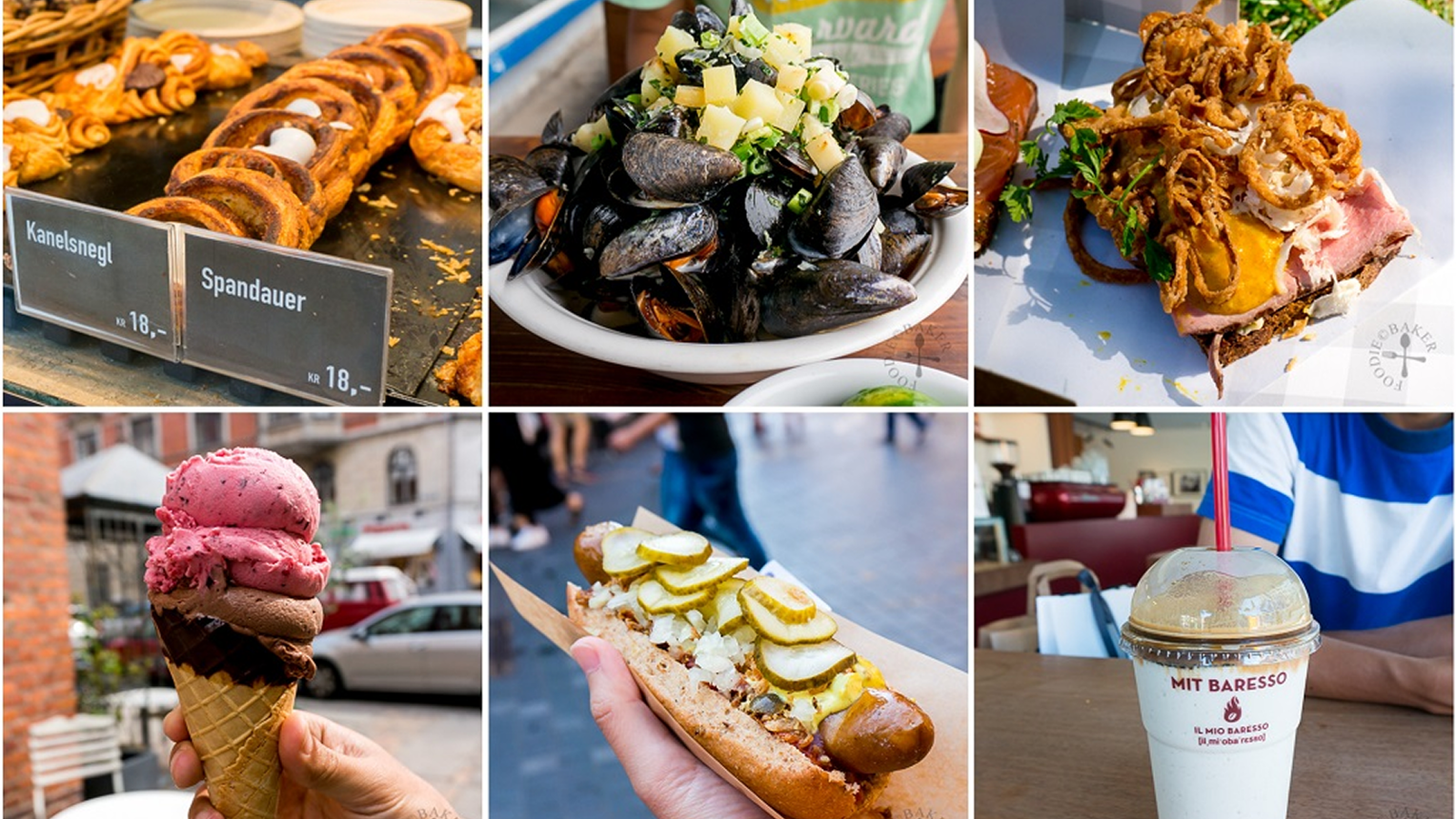
Smørrebrød is perhaps the most recognizable traditional Danish food.
It consists of a slice of dense rye bread topped with a variety of ingredients. Popular toppings include smoked fish, pickled herring, roast beef, cheese, eggs and seafood.
The combinations can be simple or surprisingly elaborate.
For travelers, smørrebrød is an easy introduction to Danish food because you can try several different varieties in one meal.
Best place to try: Traditional Danish restaurants and cafés in Copenhagen.
2. Stegt Flæsk
Stegt flæsk is a classic Danish dish featuring crispy slices of pork served with potatoes and a creamy parsley sauce.
The combination of crispy meat, potatoes and sauce makes it a particularly hearty meal.
It has long been associated with traditional Danish home cooking and remains a popular dish to look for when exploring local cuisine.
Best for: Travelers looking for traditional Danish comfort food.
3. Danish Hot Dog
The Danish hot dog is a popular street-food option and is particularly easy to find in Copenhagen.
A traditional Danish hot dog can include a sausage served in a bun with mustard, ketchup, remoulade, crispy onions, fresh onions and pickles.
Different vendors have their own variations.
For a quick meal between sightseeing stops, visiting a traditional hot-dog stand is an easy way to experience an everyday Danish favorite.
4. Frikadeller
Frikadeller are traditional Danish meatballs.
They are commonly made with minced meat and combined with ingredients such as onions, eggs and seasoning.
They can be served with potatoes, vegetables, gravy or other traditional sides.
You’ll find variations of frikadeller across Denmark, from home-style cooking to restaurant menus.
For visitors interested in traditional Danish food, they’re one of the dishes worth trying.
5. Flæskesteg
Flæskesteg is Danish roast pork traditionally prepared with a crispy rind.
The dish is often served with potatoes, gravy and red cabbage.
It is particularly associated with traditional Danish meals and festive occasions.
The crispy pork rind is an important part of the dish, providing a contrast to the tender meat underneath.
6. Pickled Herring
Herring has been an important part of Scandinavian food traditions for centuries.
In Denmark, pickled herring is often served as part of a smørrebrød meal.
It can be prepared with different marinades and flavors, including onion, herbs and spices.
If you’re new to pickled herring, try a small portion alongside other toppings rather than making it the centerpiece of your meal.
7. Danish Fish Cakes — Fiskefrikadeller
Fiskefrikadeller are Danish fish cakes typically made from minced fish and combined with ingredients such as onions, eggs and seasoning.
They’re usually fried until golden on the outside while remaining soft inside.
They can be served with potatoes, vegetables, remoulade or other sauces.
Because Denmark has a long maritime tradition, seafood-based dishes such as fiskefrikadeller are an important part of the country’s food culture.
8. Leverpostej
Leverpostej is a traditional Danish liver pâté.
It’s commonly spread on rye bread and can be served with toppings such as pickled vegetables, onions or crispy bacon.
It is especially associated with Danish everyday meals and lunch traditions.
If you’re exploring smørrebrød, leverpostej is one of the classic toppings to look for.
9. Rugbrød
Rugbrød is traditional Danish rye bread and is an important foundation of Danish cuisine.
The bread is dense, dark and rich in flavor compared with many lighter European breads.
It is commonly used as the base for smørrebrød and can be paired with fish, meat, cheese and vegetables.
Fresh Danish rye bread from a local bakery is worth trying even on its own.
10. Wienerbrød — Danish Pastry
What many people around the world simply call a “Danish” is known in Denmark as wienerbrød.
These pastries come in many shapes and varieties and can contain butter, custard, fruit, cream, cinnamon or other fillings.
Despite their international reputation, trying fresh wienerbrød in a Danish bakery is a different experience from eating a packaged version elsewhere.
Pair one with coffee for a classic Danish café experience.
11. Kanelsnegle
Kanelsnegle is a Danish cinnamon pastry.
The pastry is rolled with cinnamon and sugar and baked until golden.
You’ll find versions in bakeries and cafés throughout Denmark.
It makes an excellent breakfast or afternoon snack, particularly when served fresh and accompanied by coffee.
For travelers with a sweet tooth, visiting a local bakery is one of the easiest ways to experience Danish food culture.
12. Risalamande
Risalamande is a traditional Danish rice dessert associated particularly with Christmas.
It is made with rice pudding combined with whipped cream and chopped almonds, usually served with a cherry sauce.
Despite its French-inspired name, it is strongly associated with Danish Christmas traditions.
If you’re visiting Denmark during the holiday season, look for it on seasonal menus.
13. Æbleskiver
Æbleskiver are small, round Danish pancake-like pastries traditionally associated with Christmas and winter gatherings.
They are usually served warm and accompanied by powdered sugar and jam.
Their distinctive round shape makes them easy to recognize.
During the festive season, you may find them at Christmas markets and seasonal food stalls.
14. Danish Cheese
Denmark has a long tradition of cheese production.
You’ll find both mild and stronger varieties made from cow’s milk and other regional traditions.
Danish cheese can be enjoyed on rye bread, alongside pastries and fruit or as part of a larger Scandinavian-style meal.
Try visiting a local market or specialty food shop to discover different varieties.
15. Danish Seafood
With its extensive coastline and maritime history, Denmark has a strong seafood tradition.
Depending on the season and location, you may find dishes featuring:
- Herring
- Cod
- Salmon
- Shrimp
- Mussels
- Smoked fish
Copenhagen’s restaurants offer everything from traditional seafood dishes to modern Nordic interpretations.
Coastal towns can also be excellent places to try locally sourced seafood.
Danish Foods to Try by Meal
Breakfast
Try:
- Wienerbrød
- Kanelsnegle
- Rye bread
- Danish cheese
- Coffee
Lunch
Try:
- Smørrebrød
- Pickled herring
- Leverpostej
- Fiskefrikadeller
Dinner
Try:
- Stegt flæsk
- Flæskesteg
- Frikadeller
- Fresh seafood
Dessert
Try:
- Risalamande
- Æbleskiver
- Danish pastries
Where to Experience Danish Food
You don’t need to visit expensive restaurants to experience Danish cuisine.
Some of the best places to start include:
Traditional restaurants: Look for restaurants serving classic Danish dishes.
Bakeries: Excellent for pastries, rye bread and cinnamon rolls.
Food markets: Useful for sampling different foods in one location.
Street-food markets: A good option for casual meals and modern interpretations of Danish dishes.
Local cafés: Ideal for pastries, coffee and simple Danish lunches.
Danish Drinks to Try
Food is only part of Denmark’s culinary culture.
Danish Beer
Denmark has a strong brewing tradition, with both large breweries and smaller craft producers.
Coffee
Coffee is deeply connected to Danish café culture and is often enjoyed alongside pastries.
Aquavit
Aquavit is a traditional Scandinavian spirit that can be found alongside certain Danish meals, particularly traditional dishes and festive occasions.
Best Food Experiences in Copenhagen
Copenhagen is the easiest place to experience a wide range of Danish food in a short trip.
You can start your morning at a local bakery with fresh wienerbrød, enjoy smørrebrød for lunch and finish the day with traditional Danish food at a restaurant.
Food markets also make it possible to sample different dishes without committing to a full sit-down meal.
If you’re interested in modern Nordic cuisine, Copenhagen also has a large selection of restaurants that reinterpret traditional Danish ingredients and techniques.
Danish Food Etiquette
Dining in Denmark is generally relaxed, but a few simple habits can make your experience easier.
Take your time with meals, particularly at traditional restaurants.
When eating smørrebrød, the toppings are generally meant to be eaten together with the rye bread rather than separately.
At bakeries and cafés, it’s common to enjoy pastries with coffee as a relaxed break during sightseeing.
Final Thoughts
Danish cuisine reflects the country’s history, geography and everyday lifestyle.
Start with smørrebrød and rugbrød, try traditional dishes such as stegt flæsk and frikadeller, and make time for fresh seafood along the coast.
Then visit a Danish bakery for wienerbrød or kanelsnegle and experience the country’s café culture.
Whether you’re exploring Copenhagen, Aarhus, Odense or smaller coastal towns, food provides another way to understand Denmark beyond its castles, museums and landscapes.