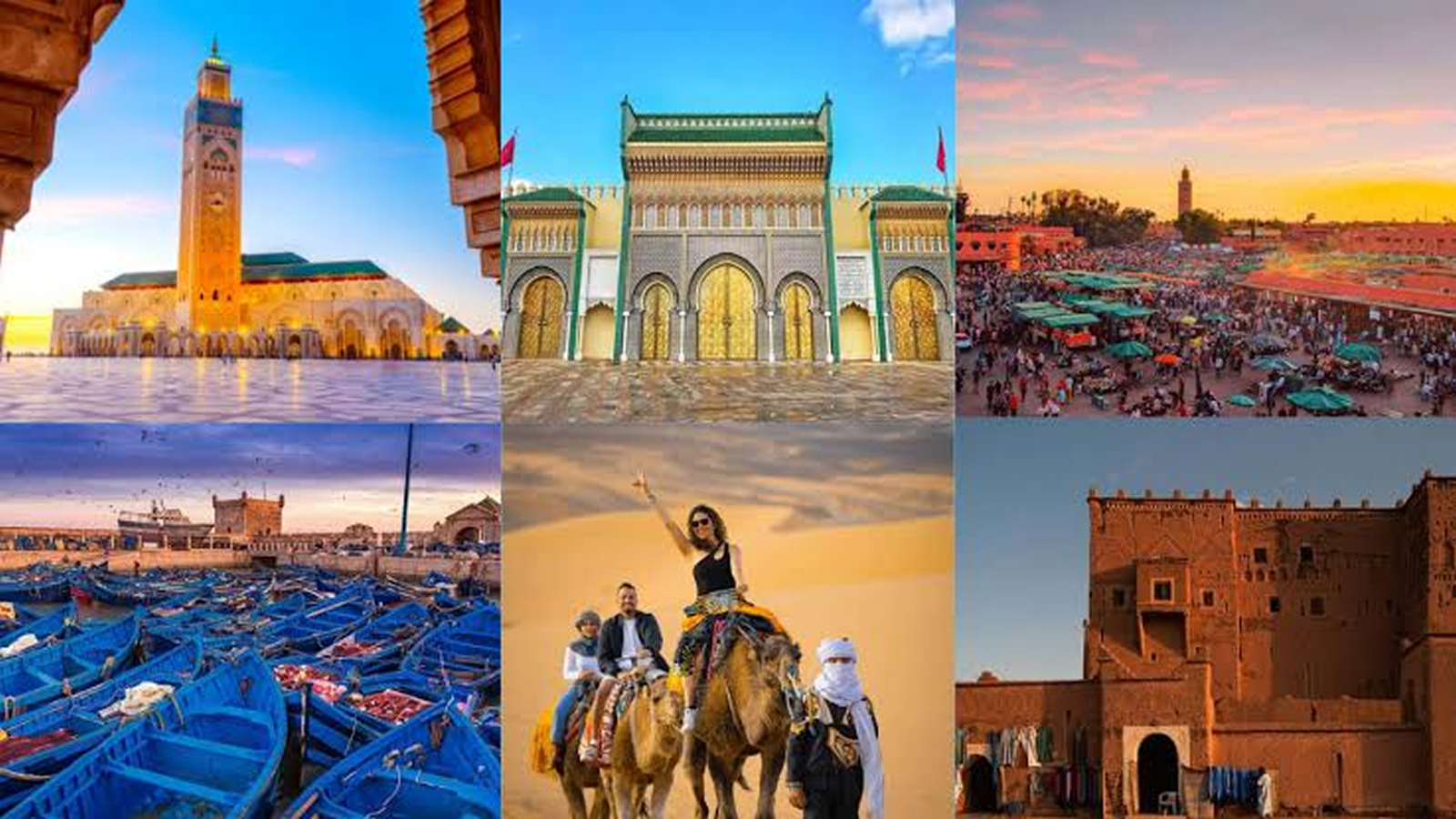
Morocco is a destination of contrasts. Within a single trip, you can walk through ancient medinas, explore colorful souks, cross the Atlas Mountains, sleep beneath the stars in the Sahara, relax along the Atlantic coast, and discover some of North Africa’s most impressive architecture.
From Marrakech and Fez to Chefchaouen, the Sahara Desert, and Essaouira, Morocco offers a remarkable combination of history, culture, landscapes, food, and adventure.
If you’re planning your first visit, these are some of the best things to do in Morocco.
1. Explore the Medina of Marrakech
Marrakech is one of Morocco’s most famous destinations and an excellent starting point for a first trip.
The heart of the city is its historic medina, where narrow streets lead through markets, traditional houses, cafés, workshops, and historic landmarks.
Spend time exploring:
- Jemaa el-Fnaa
- Bahia Palace
- Koutoubia Mosque
- Saadian Tombs
- Souks
- Traditional riads
The medina is best explored slowly. Rather than trying to find every shop or attraction, allow yourself time to wander through the streets and discover small workshops and food stalls.
2. Spend a Night in the Sahara Desert
A journey into the Sahara Desert is one of Morocco’s most memorable experiences.
The Erg Chebbi dunes near Merzouga are particularly famous for their enormous golden sand formations.
A desert experience can include:
- Camel trekking
- Sunset over the dunes
- Traditional Berber music
- Desert camping
- Stargazing
- Sunrise walks
Spend at least one night in the desert if your itinerary allows.
The landscape becomes particularly atmospheric around sunrise and sunset when the color of the sand changes with the light.
3. Wander Through Chefchaouen
Chefchaouen is famous for its blue-painted buildings and mountain setting.
The historic medina is filled with narrow lanes, blue walls, small shops, cafés, and colorful doors.
Take your time walking through the old town and looking beyond the most photographed streets.
You can also hike toward viewpoints above the city for panoramic views.
Chefchaouen is particularly appealing to photographers and travelers who enjoy smaller, slower-paced destinations.
4. Explore the Ancient Medina of Fez
Fez is one of Morocco’s most historically significant cities.
The medina of Fez is a maze of narrow streets filled with traditional markets, craftspeople, mosques, historic buildings, and food stalls.
The city is particularly famous for its traditional craftsmanship.
Look for:
- Leather goods
- Metalwork
- Ceramics
- Textiles
- Traditional Moroccan crafts
Exploring Fez with a knowledgeable local guide can make it easier to understand the history and navigate the maze-like streets.
5. Visit Aït Benhaddou
Aït Benhaddou is a historic fortified settlement in southern Morocco.
The earthen architecture rises dramatically against the surrounding landscape and has become one of the country’s most recognizable sights.
The ksar has also appeared in numerous film and television productions.
Walk through the settlement, explore its narrow pathways, and climb toward higher viewpoints for views across the surrounding landscape.
Aït Benhaddou is often included on routes between Marrakech and the Sahara.
6. Cross the Atlas Mountains
The Atlas Mountains provide a dramatic contrast to Morocco’s cities and desert landscapes.
Roads crossing the mountains offer spectacular views of valleys, villages, cliffs, and high-altitude landscapes.
Depending on your itinerary, you can explore areas around the High Atlas through:
- Hiking
- Scenic drives
- Village visits
- Mountain excursions
- Guided trekking
If you enjoy outdoor travel, consider spending more than a single day in the mountains.
7. Explore the Souks of Marrakech
Shopping in Morocco is an experience in itself.
Marrakech’s souks are filled with stalls selling traditional crafts, textiles, spices, lamps, leather goods, ceramics, and souvenirs.
Rather than treating the souks as a simple shopping destination, take time to observe the artisans and traditional production methods.
If you’re buying something, compare prices and quality before making a decision.
Popular souvenirs include:
- Moroccan rugs
- Leather bags
- Ceramics
- Spices
- Lanterns
- Textiles
8. Discover Essaouira
Essaouira is a relaxed Atlantic coastal city with whitewashed buildings, blue doors, fishing boats, seafood restaurants, and a historic medina.
The atmosphere is considerably slower than Marrakech.
Walk along the old city walls, explore the harbor, and enjoy freshly prepared seafood.
The city is also known for its coastal winds and water sports.
Essaouira works well as a short escape from Marrakech or as part of a longer Morocco road trip.
9. Try Moroccan Food
Moroccan cuisine is one of the country’s biggest attractions.
Food varies by region, but several dishes are widely associated with Moroccan cooking.
Tagine
Slow-cooked meat, vegetables, fruit, and spices prepared in a distinctive conical cooking vessel.
Couscous
A staple dish often served with vegetables and meat.
Pastilla
A layered pastry traditionally combining savory and sweet flavors.
Harira
A hearty soup commonly associated with Moroccan cuisine.
Mint Tea
Moroccan mint tea is an important part of the country’s hospitality and social culture.
Try traditional dishes at local restaurants, family-run establishments, and food markets rather than limiting yourself to hotel dining.
10. Explore the Blue Gate and Historic Fez
One of Fez’s most recognizable landmarks is Bab Bou Jeloud, often called the Blue Gate.
The gateway leads toward the historic medina and is surrounded by restaurants, shops, and busy streets.
From here, explore deeper into the old city.
You’ll find historic mosques, madrasas, workshops, markets, and traditional architecture.
The area becomes particularly atmospheric later in the day when the streets begin filling with locals and visitors.
11. Visit Casablanca
Casablanca is Morocco’s largest city and its major commercial center.
It offers a more modern urban experience than Marrakech or Fez.
The city’s most famous landmark is the Hassan II Mosque, dramatically positioned beside the Atlantic Ocean.
Other areas worth exploring include:
- Corniche
- Central Market
- Art Deco districts
- Mohammed V Square
- Old Medina
Casablanca works particularly well as the beginning or end of a Morocco itinerary because of its international connections.
12. Relax in the Ouzoud Waterfalls
The Ouzoud Waterfalls are among Morocco’s most famous natural attractions.
Located in the Atlas region, the waterfalls cascade through a green landscape surrounded by cliffs and vegetation.
The area is a popular day trip from Marrakech.
You can walk around the viewpoints, explore nearby trails, and enjoy the scenery away from the city’s busy streets.
If visiting during warmer periods, start early to avoid the strongest midday heat.
13. Experience Moroccan Hammam
A traditional hammam is a cultural experience as well as a form of relaxation.
Moroccan hammams range from simple local bathhouses to more luxurious spa experiences.
A traditional experience may involve:
- Steam
- Black soap
- Body exfoliation
- Washing
- Massage
If you want a more traditional experience, research the type of hammam carefully before booking so you know what to expect.
14. Explore the Dades and Todra Gorges
Morocco’s southeastern landscapes include dramatic mountain gorges and desert valleys.
The Todra Gorge is particularly impressive, with towering rock walls rising above the valley.
The Dades Valley offers a contrasting landscape of winding roads, rocky mountains, agricultural areas, and traditional villages.
These destinations work particularly well as part of a road trip toward the Sahara.
15. Watch the Sunset Over the Moroccan Landscape
Morocco has no shortage of beautiful places to watch the sun go down.
Depending on your itinerary, you can experience sunset:
- From the dunes of the Sahara
- Above Marrakech
- Along Essaouira’s coast
- In the Atlas Mountains
- Around Aït Benhaddou
- In the Dades Valley
Don’t underestimate these simple moments.
After a busy day exploring markets, monuments, and historic cities, watching the landscape change color can become one of the most memorable parts of your trip.
Best Places to Visit in Morocco
| Destination | Best Known For |
|---|---|
| Marrakech | Medina, souks and palaces |
| Fez | Historic medina and craftsmanship |
| Chefchaouen | Blue-painted streets |
| Merzouga | Sahara Desert |
| Essaouira | Atlantic coast and relaxed atmosphere |
| Aït Benhaddou | Historic architecture |
| Casablanca | Hassan II Mosque and modern city |
| Atlas Mountains | Hiking and mountain scenery |
| Ouzoud | Waterfalls |
| Todra Gorge | Dramatic mountain landscapes |
How Many Days Do You Need in Morocco?
For a first trip, 10–14 days gives you enough time to experience several regions.
A possible itinerary could be:
Days 1–3: Marrakech
Day 4: Aït Benhaddou and surrounding areas
Days 5–6: Sahara Desert
Day 7: Dades or Todra Gorge
Days 8–9: Fez
Day 10: Chefchaouen
Days 11–12: Casablanca
Days 13–14: Essaouira or additional time in Marrakech
Don’t try to reproduce this exact route if it creates excessive driving. Morocco is large, and a slower itinerary can be more enjoyable.
Morocco Travel Tips for First-Time Visitors
Dress respectfully
Morocco is a culturally diverse country, and modest clothing is generally appropriate, particularly when visiting religious or traditional areas.
Carry some cash
Cards are accepted in many hotels and established businesses, but cash remains useful for markets, taxis, small restaurants, and local shops.
Stay in a riad
In cities such as Marrakech and Fez, traditional riads can offer a more atmospheric alternative to conventional hotels.
Be prepared for different climates
A Morocco itinerary can take you from the Atlantic coast to the mountains and desert, so temperatures can vary significantly.
Don’t rush the desert
If the Sahara is one of your main reasons for visiting Morocco, allow enough time to enjoy the experience rather than treating it as a quick stop between cities.
Final Thoughts
Morocco is a destination best experienced through contrasts.
One day you might be walking through the narrow streets of Marrakech, the next crossing the Atlas Mountains, followed by a night beneath the stars in the Sahara Desert.
Then come the blue streets of Chefchaouen, the historic medina of Fez, the Atlantic atmosphere of Essaouira, and the dramatic architecture of Aït Benhaddou.
For a first trip, focus on a handful of regions rather than trying to see every corner of the country.
The combination of history, food, architecture, mountains, desert, and coastal landscapes is what makes Morocco such a memorable destination.