
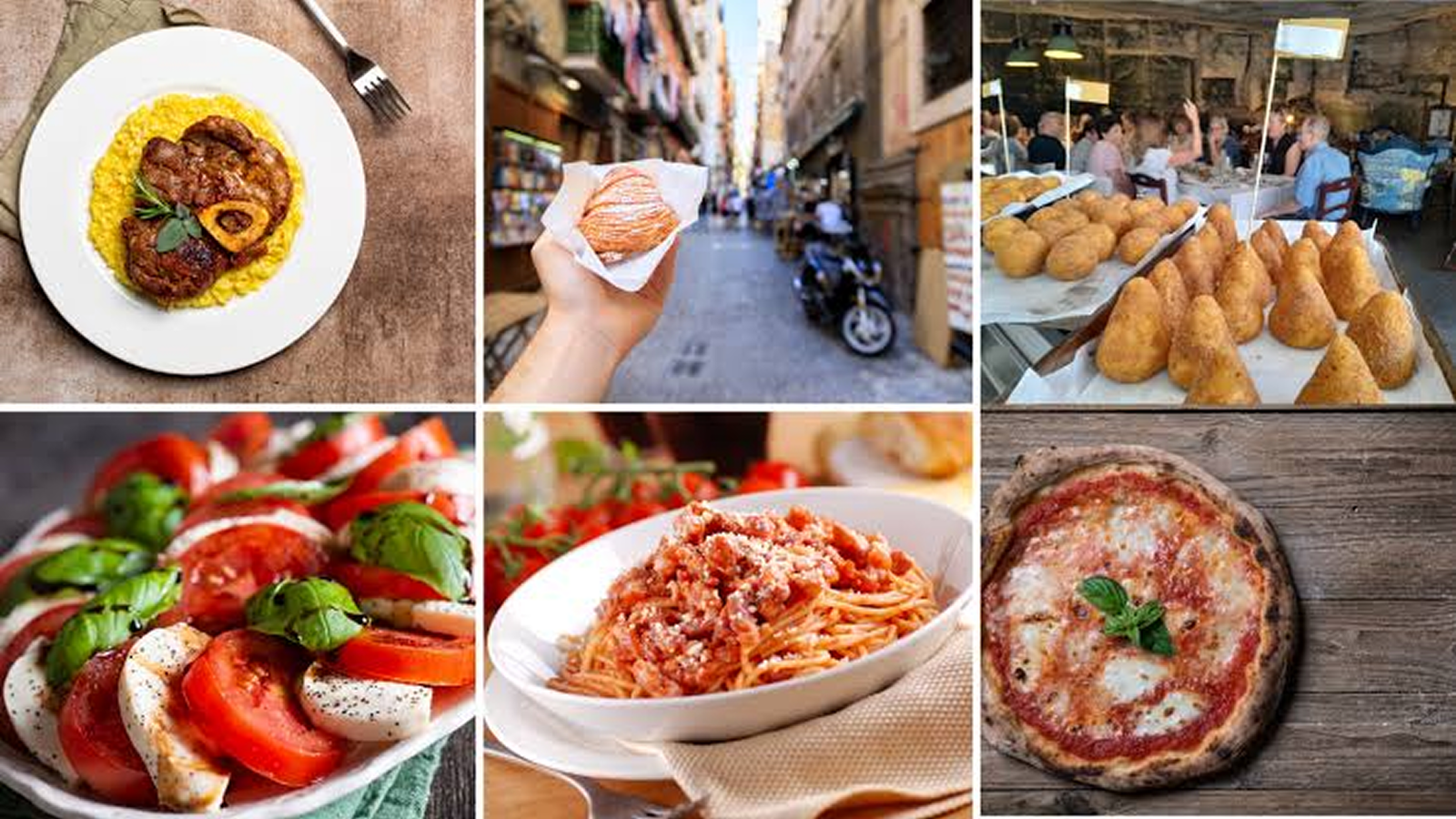
Italy is one of the world’s great food destinations. From handmade pasta and wood-fired pizza to regional cheeses, seafood, desserts, and traditional street food, Italian cuisine changes dramatically from one part of the country to another.
A trip to Italy is therefore much more than visiting restaurants in Rome, Florence, or Venice. Each region has its own ingredients, recipes, cooking traditions, and specialties.
If you’re planning an Italian vacation, these are 15 foods worth trying in Italy, along with where you can find them and what makes each dish special.
1. Pizza Napoletana — Naples
Few foods are more closely associated with Italy than pizza.
For the classic experience, head to Naples, where Neapolitan pizza is deeply connected to the city’s culinary identity.
Traditional pizza features a soft, airy crust with a relatively simple combination of ingredients.
Try:
- Margherita
- Marinara
- Pizza with seasonal vegetables
- Local seafood toppings
A classic Margherita typically combines tomato, mozzarella, basil, and olive oil.
The simplicity is part of the appeal: good ingredients and careful preparation do most of the work.
2. Pasta Carbonara — Rome
Carbonara is one of Rome’s most famous pasta dishes.
The traditional preparation is built around pasta, eggs, Pecorino Romano, black pepper, and cured pork such as guanciale.
The sauce is creamy because of the emulsion created from the eggs, cheese, pasta water, and rendered fat rather than because of cream.
Where to try it
Look for traditional Roman trattorias in neighborhoods such as:
- Trastevere
- Testaccio
- Monti
- Centro Storico
For the most authentic experience, avoid versions overloaded with cream or unnecessary ingredients.
3. Cacio e Pepe — Rome
Another Roman classic is cacio e pepe.
The dish uses just a handful of ingredients:
- Pasta
- Pecorino Romano
- Black pepper
- Pasta water
Despite its simplicity, getting the texture right requires skill.
The cheese and pasta water are combined to create a smooth sauce that coats the pasta.
It’s proof that Italian cooking doesn’t always require a long ingredient list.
4. Bistecca alla Fiorentina — Florence
Florence is famous for bistecca alla Fiorentina, a large Tuscan-style steak traditionally cooked over a hot grill.
The steak is generally served simply, allowing the quality of the meat and grilling technique to stand out.
Best enjoyed with
- Tuscan vegetables
- Roasted potatoes
- Local olive oil
- Tuscan wine
This is a dish to order when you’re looking for a substantial meal rather than a light pasta lunch.
5. Ribollita — Tuscany
Tuscany is also known for hearty rustic cooking.
Ribollita is a traditional soup made with ingredients such as bread, beans, vegetables, and cabbage.
The name refers to the idea of “reboiling” the soup.
It’s particularly suited to cooler weather and offers a taste of traditional Tuscan home-style cooking.
6. Risotto alla Milanese — Milan
Milan is famous for risotto alla Milanese, a creamy rice dish traditionally flavored with saffron.
The saffron gives the dish its distinctive golden color and subtle aroma.
It is often served as a first course and can be paired with other Milanese specialties.
Try it with
- Ossobuco
- Seasonal vegetables
- Local wine
For travelers exploring northern Italy, this is one of the region’s essential dishes.
7. Ossobuco — Milan
Another Milanese specialty is ossobuco, traditionally prepared using cross-cut veal shanks slowly cooked with vegetables, broth, and wine.
The bone marrow in the center is an important part of the dish.
Ossobuco is hearty and particularly suitable for a long, relaxed Italian meal.
It is often associated with northern Italian cooking and is frequently served alongside risotto.
8. Tagliatelle al Ragù — Bologna
If you’re visiting Bologna, don’t leave without trying its famous ragù.
The dish traditionally pairs a slow-cooked meat sauce with fresh tagliatelle.
Outside Italy, ragù is often associated with spaghetti, but traditional Bolognese cuisine more commonly pairs the sauce with fresh egg pasta such as tagliatelle.
Where to experience it
Explore Bologna’s historic center and look for traditional trattorias serving handmade pasta.
9. Tortellini — Bologna
Bologna is also famous for tortellini, small stuffed pasta traditionally filled with a mixture of ingredients such as meat and cheese.
One classic preparation is tortellini in brodo, where the pasta is served in a clear broth.
It is a comforting dish that reflects the culinary traditions of Emilia-Romagna.
10. Cicchetti — Venice
Venice has its own style of casual dining known as cicchetti.
These small portions are similar to Venetian tapas and are often enjoyed with a drink in local wine bars called bacari.
You might find:
- Small sandwiches
- Seafood
- Marinated vegetables
- Polenta-based snacks
- Small meat dishes
- Fried specialties
Cicchetti are a great way to explore several flavors without committing to one large meal.
11. Fritto Misto — Venice and Coastal Italy
Italy’s coastal regions are known for excellent seafood.
Fritto misto generally consists of assorted seafood lightly fried and served hot.
Depending on the region, you may find:
- Small fish
- Squid
- Shrimp
- Seasonal seafood
It is particularly enjoyable near the coast, where the seafood is often served shortly after preparation.
12. Pesto Genovese — Genoa
Liguria is the birthplace of pesto Genovese.
Traditional pesto is made using ingredients such as:
- Fresh basil
- Pine nuts
- Garlic
- Parmigiano-Reggiano
- Pecorino
- Extra-virgin olive oil
It is commonly served with pasta.
In Genoa and the surrounding Ligurian region, you may encounter local pasta varieties traditionally paired with pesto, including trofie.
13. Arancini — Sicily
Sicily offers a completely different food culture from northern Italy.
One of its most famous street foods is arancini.
These fried rice balls are usually filled with ingredients such as ragù, cheese, or vegetables.
Their exact shape and fillings can vary between parts of Sicily.
Best places to try them
Look for them in:
- Palermo
- Catania
- Messina
- Smaller Sicilian towns
They make an excellent quick lunch or snack while exploring.
14. Cannoli — Sicily
Sicily is also famous for cannoli, crisp pastry shells filled with sweetened ricotta.
Traditional versions can include additions such as:
- Pistachios
- Candied fruit
- Chocolate
- Citrus
For the freshest experience, order cannoli from a respected local pastry shop rather than relying only on tourist-focused restaurants.
15. Gelato — Throughout Italy
No Italian food list would be complete without gelato.
Although gelato is available throughout Italy, quality varies considerably between shops.
Look for places where:
- Flavors appear natural rather than overly artificial
- Seasonal ingredients are used
- Gelato isn’t piled extremely high
- The shop has a strong local reputation
Try classic flavors such as:
- Pistachio
- Hazelnut
- Stracciatella
- Chocolate
- Lemon
- Fior di latte
Don’t feel limited to one flavor. Combining complementary flavors is part of the fun.
Italian Food Changes by Region
One of the most important things to understand about eating in Italy is that there isn’t one single Italian cuisine.
Northern Italy
Northern regions are known for foods such as:
- Risotto
- Polenta
- Fresh egg pasta
- Butter-based sauces
- Alpine cheeses
Central Italy
Tuscany, Lazio, and surrounding regions are known for:
- Pecorino
- Olive oil
- Rustic soups
- Pasta dishes
- Grilled meats
Southern Italy
Southern cuisine often features:
- Tomatoes
- Olive oil
- Seafood
- Eggplant
- Fresh vegetables
- Wheat-based pasta
Sicily
Sicilian cuisine reflects centuries of Mediterranean influences and is particularly known for seafood, citrus, pistachios, eggplant, sweets, and street food.
Best Italian Cities for Food Lovers
If food is a major reason for your Italy trip, consider building your itinerary around different culinary regions.
Naples
Best known for pizza and southern Italian flavors.
Rome
Excellent for classic Roman pasta dishes.
Bologna
A major destination for handmade pasta and Emilia-Romagna cuisine.
Florence
Known for Tuscan cooking and its famous steak.
Milan
Ideal for northern Italian specialties and modern dining.
Venice
Great for seafood, cicchetti, and Venetian cuisine.
Palermo
One of Italy’s most exciting cities for street food and Sicilian specialties.
Italian Foods to Try for Breakfast
Italian breakfast is generally simpler than breakfast in many other countries.
A typical café breakfast might include:
- Espresso
- Cappuccino
- Cornetto
- Pastries
A cornetto is similar to a croissant but traditionally has its own Italian variations.
For a local experience, visit a neighborhood bar in the morning and order a coffee with a pastry.
What to Drink With Italian Food
Italy is famous for its wine, but you don’t need to order alcohol to enjoy Italian cuisine.
Popular non-alcoholic choices include:
- Espresso
- Sparkling water
- Still water
- Italian soft drinks
- Fresh juices
If you drink wine, regional pairings can add another dimension to your meal.
Ask the restaurant for a local recommendation rather than automatically choosing an internationally famous wine.
Italian Food Etiquette Tips
Don’t rush your meal
Italian dining is often about enjoying the entire experience.
Coffee has its own culture
Espresso is commonly enjoyed quickly, while cappuccino is traditionally associated with breakfast rather than a heavy meal.
Pasta is usually a course
In traditional meals, pasta may be served as a primo, followed by a second course.
You don’t need to order multiple courses, but understanding the structure can help when dining at traditional restaurants.
Look for local specialties
A restaurant in Bologna may offer very different dishes from one in Naples.
That’s part of the experience.
How to Plan a Food-Focused Italy Trip
If food is one of your main reasons for visiting Italy, consider a route that crosses several culinary regions.
Example 10-day food itinerary
Days 1–2: Rome
Explore Roman pasta and traditional trattorias.
Days 3–4: Florence
Try Tuscan specialties and local steak.
Days 5–6: Bologna
Focus on fresh pasta, ragù, and regional cuisine.
Days 7–8: Venice
Explore cicchetti and seafood.
Days 9–10: Naples
Finish with authentic Neapolitan pizza.
This route combines several distinct food cultures while also allowing you to experience some of Italy’s most famous cities.
Final Thoughts
Food is one of the best ways to understand Italy.
A plate of carbonara in Rome, fresh pasta in Bologna, pizza in Naples, pesto in Genoa, seafood in Venice, or arancini in Sicily tells you something about the region where it was prepared.
Don’t spend your entire Italian vacation looking for the same dishes everywhere.
Instead, eat regionally.
Visit local markets, try neighborhood restaurants, order specialties you don’t recognize, and ask locals what they recommend.
The best Italian food experiences often aren’t the most complicated ones. A bowl of handmade pasta, fresh bread with olive oil, a simple plate of seasonal vegetables, or a perfectly made gelato can become one of the most memorable parts of your trip.