
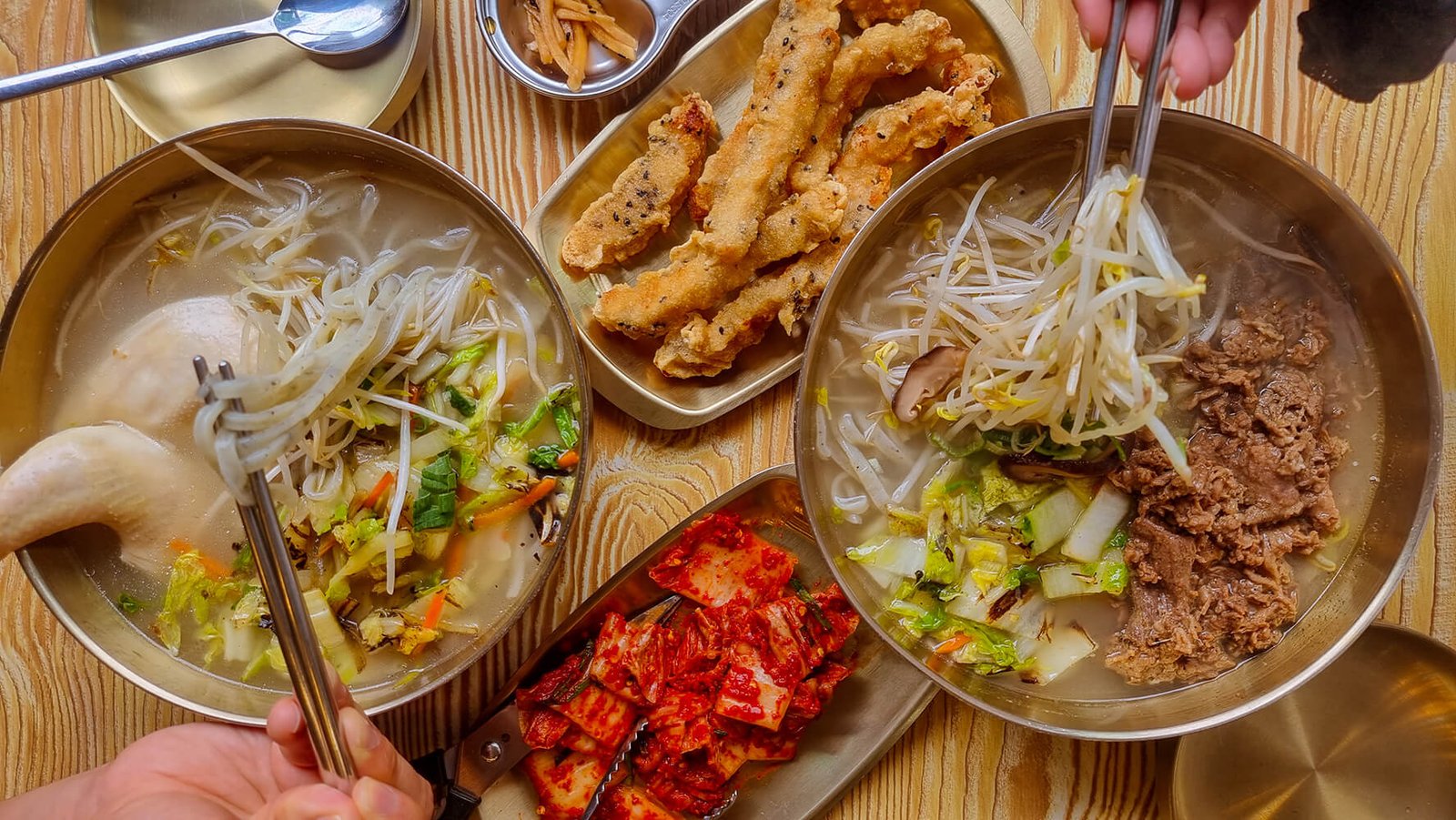
South Korea is one of Asia’s most exciting food destinations, combining centuries-old recipes with vibrant street food, modern cafés and regional specialties. From sizzling Korean barbecue and comforting stews to crispy pancakes and sweet desserts, food is an important part of the Korean travel experience.
Whether you’re exploring Seoul, Busan, Jeju Island or smaller cities, trying local dishes can make your trip much more memorable.
Here are 15 Korean foods worth trying on your next trip to South Korea.
1. Korean BBQ
Korean barbecue is one of the country’s most iconic food experiences.
At Korean BBQ restaurants, diners typically grill marinated or seasoned meat at a table-top grill. Popular choices include beef, pork belly and marinated beef.
The meal usually comes with banchan, small side dishes that can include kimchi, vegetables and other Korean specialties.
Where to try it: Seoul, Busan and almost every major Korean city.
2. Bibimbap
Bibimbap is a colorful Korean rice dish traditionally served with vegetables, rice, meat or other toppings, and a spicy-sweet gochujang sauce.
The ingredients are mixed together before eating, creating a combination of textures and flavors in every bite.
Different regions and restaurants offer their own versions, making bibimbap an easy dish to encounter throughout South Korea.
Where to try it: Seoul, Jeonju and Busan.
3. Kimchi
Kimchi is one of the defining foods of Korean cuisine.
It usually consists of fermented vegetables seasoned with ingredients such as chili, garlic, ginger and other spices. Napa cabbage kimchi is particularly well known, but many varieties exist.
Kimchi is commonly served as a side dish, but it also appears in soups, stews, fried rice and other Korean dishes.
Where to try it: Everywhere in South Korea.
4. Tteokbokki
Tteokbokki is one of Korea’s most recognizable street foods.
It features chewy rice cakes cooked in a spicy and slightly sweet sauce, traditionally made with gochujang. Depending on the preparation, ingredients such as fish cakes, boiled eggs and green onions may also be added.
It is particularly popular as a casual snack.
Where to try it: Seoul street markets and traditional markets throughout South Korea.
5. Japchae
Japchae is a popular Korean noodle dish made with chewy glass noodles, vegetables and usually meat.
The noodles are made from sweet potato starch and are stir-fried with ingredients such as spinach, mushrooms, carrots and onions.
It is commonly served as a side dish or part of a larger Korean meal.
Where to try it: Seoul and traditional Korean restaurants throughout the country.
6. Samgyeopsal
Samgyeopsal refers to thick slices of pork belly that are grilled at the table.
The meat is often wrapped in lettuce leaves with garlic, sauces and other side dishes before being eaten.
It is a social meal and a particularly enjoyable choice when traveling with friends or family.
Where to try it: Seoul, Busan and other major cities.
7. Korean Fried Chicken
Korean fried chicken has developed a strong international following, but trying it in South Korea is a different experience.
The chicken is typically fried until exceptionally crisp and can be served with sauces ranging from spicy and sweet to savory.
It is often enjoyed with Korean beer, although there are plenty of non-alcoholic options as well.
Where to try it: Seoul, Busan and major cities across South Korea.
8. Sundubu-jjigae
Sundubu-jjigae is a spicy Korean stew featuring soft tofu.
The dish is commonly prepared with ingredients such as seafood, meat, vegetables and chili-based broth. It is often served bubbling hot in a stone or earthenware pot.
It makes a comforting meal, particularly during colder weather.
Where to try it: Seoul and traditional Korean restaurants nationwide.
9. Bulgogi
Bulgogi is a famous Korean grilled beef dish.
Thinly sliced beef is typically marinated with ingredients that can include soy sauce, garlic, sesame oil and other seasonings before being grilled or cooked.
The result is tender, savory and slightly sweet meat.
Where to try it: Seoul and traditional Korean restaurants throughout South Korea.
10. Korean Seafood
South Korea’s long coastline means seafood plays an important role in its food culture.
In coastal destinations such as Busan and Jeju Island, travelers can find fresh fish, shellfish and other seafood dishes.
Busan’s Jagalchi Market is particularly well known for its seafood atmosphere and variety.
Where to try it: Busan, Jeju Island and other coastal areas.
11. Pajeon
Pajeon is a savory Korean pancake, commonly prepared with green onions and other ingredients.
Seafood versions, known as haemul pajeon, are especially popular and can contain ingredients such as shrimp, squid and other seafood.
It is often shared at the table and pairs well with other Korean dishes.
Where to try it: Seoul, Busan and traditional Korean restaurants.
12. Gimbap
Gimbap is a convenient Korean rice-and-seaweed roll that is ideal for travelers looking for a quick meal.
It is typically made with rice, seaweed and fillings such as vegetables, egg, pickled radish and meat or seafood.
You’ll find many variations, from simple traditional versions to more elaborate modern combinations.
Where to try it: Markets, casual restaurants and convenience stores throughout South Korea.
13. Naengmyeon
Naengmyeon is a Korean cold noodle dish that is particularly refreshing during warmer months.
The noodles can be served in a chilled broth or with a spicy sauce, depending on the style.
The dish is strongly associated with Korean regional culinary traditions and is a good choice when you want something different from the country’s many hot and spicy dishes.
Where to try it: Seoul and restaurants specializing in Korean noodles.
14. Hotteok
Hotteok is a popular Korean street-food dessert.
These sweet pancakes are usually filled with a mixture of brown sugar, cinnamon and nuts or seeds before being cooked until golden and crisp on the outside.
They are especially popular during colder weather.
Where to try it: Traditional markets and street-food areas, particularly in Seoul and Busan.
15. Korean Bingsu
Bingsu is a popular Korean shaved-ice dessert.
Modern versions can feature finely shaved ice topped with ingredients such as red beans, fruit, condensed milk, matcha or other sweet toppings.
It has become particularly popular in cafés and is an excellent way to cool down during the summer.
Where to try it: Seoul, Busan and modern cafés throughout South Korea.
Best Places for Food in South Korea
Seoul
Seoul is the easiest place to experience a wide range of Korean cuisine. Explore traditional markets, neighborhood restaurants, barbecue spots, street-food areas and modern cafés.
Busan
Busan is particularly interesting for seafood lovers. The city’s coastal location gives its food culture a strong connection to the sea.
Jeonju
Jeonju is famous for its culinary traditions and is strongly associated with bibimbap. The city’s traditional atmosphere also makes it an enjoyable destination for food-focused travelers.
Jeju Island
Jeju has its own distinctive food culture, with seafood and locally produced ingredients playing an important role.
Tips for Eating in South Korea
Try Korean Markets
Traditional markets are excellent places to sample several foods without committing to a full restaurant meal.
Don’t Skip Banchan
Many Korean meals come with several small side dishes. These can be an important part of the overall dining experience.
Eat at Busy Local Restaurants
Restaurants with a steady stream of local customers can be a useful starting point when you’re exploring unfamiliar Korean dishes.
Try Different Regions
Korean food isn’t exactly the same everywhere. Seafood in Busan, traditional food in Jeonju and island specialties in Jeju can make your trip more varied.
Explore Korean Cafés
South Korea has a strong café culture. After exploring savory dishes, leave time for desserts such as bingsu and traditional or modern Korean pastries.
Final Thoughts
Food can be one of the best ways to understand South Korea.
From sizzling Korean barbecue and comforting stews to colorful street food and modern café desserts, the country offers an impressive range of flavors and dining experiences.
You don’t need to plan your entire trip around food. Simply leave some room in your itinerary to visit a traditional market, stop at a local restaurant and try something you’ve never eaten before.
Those spontaneous meals may end up being some of your favorite memories from South Korea.