
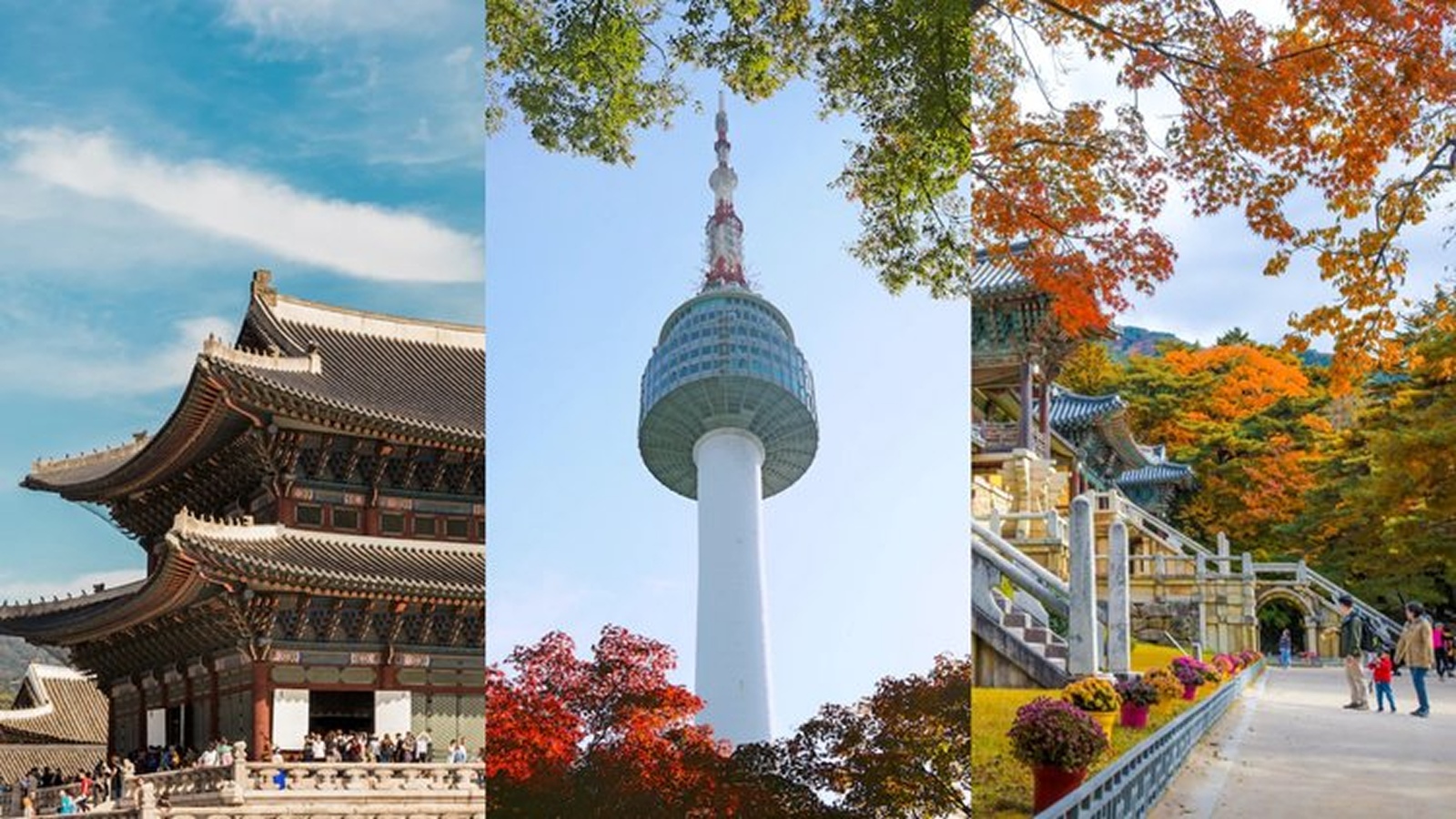
South Korea offers much more than the bright streets and modern skyline of Seoul. Across the country, you’ll find ancient palaces, peaceful temples, volcanic landscapes, coastal cities, mountain trails, traditional villages, and islands surrounded by the sea.
Whether you’re interested in history, food, nature, beaches, photography, or city life, South Korea offers plenty of destinations to build a memorable trip around.
If you’re visiting for the first time, these 15 places are worth adding to your itinerary.
1. Seoul
South Korea’s capital is the natural starting point for many international travelers.
Seoul combines ancient Korean traditions with one of Asia’s most modern urban environments. You can visit a centuries-old palace in the morning, explore a traditional neighborhood in the afternoon, and finish the day in a modern shopping or entertainment district.
Some of the city’s highlights include:
- Gyeongbokgung Palace
- Bukchon Hanok Village
- Insadong
- Myeongdong
- N Seoul Tower
- Hongdae
- Han River
Give yourself at least three or four days to experience the city properly.
2. Jeju Island
Jeju Island is one of South Korea’s most distinctive destinations.
Located south of the Korean Peninsula, the volcanic island is known for beaches, waterfalls, lava formations, coastal landscapes, and hiking trails.
The island’s most famous natural landmark is Hallasan, a volcanic mountain rising in the center of Jeju.
Other experiences include:
- Seongsan Ilchulbong
- Jeju Olle walking trails
- Manjanggul-area lava landscapes
- Waterfalls
- Coastal roads
- Traditional villages
Jeju is particularly appealing if you want to combine nature with a slower pace.
3. Busan
Busan is South Korea’s major coastal city and offers a completely different atmosphere from Seoul.
The city combines beaches, seafood markets, temples, colorful neighborhoods, and dramatic coastal scenery.
Popular places to explore include:
- Haeundae Beach
- Gwangalli Beach
- Gamcheon Culture Village
- Jagalchi Market
- Haedong Yonggungsa Temple
- Taejongdae
Busan is an excellent addition to a first South Korea itinerary.
4. Gyeongju
Often described as a living museum, Gyeongju was once the capital of the ancient Silla Kingdom.
The city is filled with historical sites, temples, tombs, and archaeological remains.
Visit:
- Bulguksa Temple
- Seokguram Grotto
- Daereungwon Tomb Complex
- Cheomseongdae
- Donggung Palace and Wolji Pond
Gyeongju is ideal for travelers who want to learn more about Korea’s ancient history beyond Seoul’s royal palaces.
5. Incheon
Incheon is located near Seoul and is often associated with its international airport, but the city itself deserves more attention.
Explore Chinatown, walk around Songdo, and visit the coastal areas.
Songdo offers a modern contrast to Seoul’s historic neighborhoods, with contemporary architecture, parks, canals, and public spaces.
Because of its proximity to Seoul, Incheon can also work well as a day trip.
6. Sokcho
Sokcho is a coastal city in northeastern South Korea and a popular gateway to Seoraksan National Park.
The city combines beaches, seafood, markets, and access to some of the country’s most beautiful mountain landscapes.
Spend time exploring:
- Sokcho Beach
- Sokcho Tourist & Fishery Market
- Abai Village
- Seoraksan National Park
Sokcho is a particularly good choice for travelers who want to combine mountains and the coast.
7. Seoraksan National Park
For outdoor travelers, Seoraksan National Park is one of South Korea’s standout destinations.
The park is known for dramatic granite peaks, forests, valleys, waterfalls, and hiking trails.
Autumn is particularly popular because the mountains can become covered in vibrant foliage.
Depending on your fitness and available time, you can choose from shorter walks or more demanding mountain routes.
Check trail conditions before setting out, especially during winter or periods of severe weather.
8. Andong
Andong offers an opportunity to experience traditional Korean culture and architecture.
The city is particularly known for Hahoe Folk Village, a historic village surrounded by beautiful countryside.
Traditional houses, cultural traditions, and the village’s setting provide a different perspective on Korea than the country’s large cities.
Andong is especially interesting for travelers who enjoy:
- History
- Traditional architecture
- Korean culture
- Photography
- Rural landscapes
9. Suwon
Located near Seoul, Suwon is famous for Hwaseong Fortress, an impressive historic structure surrounding parts of the city.
The fortress was constructed during the Joseon period and is one of the city’s defining landmarks.
You can walk along sections of the fortress walls and explore gates, towers, and surrounding streets.
Suwon is an easy addition to a Seoul itinerary if you want to explore beyond the capital.
10. Tongyeong
Tongyeong is a coastal city in southern South Korea surrounded by islands and waterways.
The city is sometimes described as a gateway to the beautiful island landscapes of the southern coast.
Explore:
- Dongpirang Village
- Tongyeong Cable Car
- Local seafood markets
- Coastal viewpoints
- Nearby islands
It’s an excellent destination for travelers looking for scenic coastal landscapes away from South Korea’s biggest cities.
11. Yeosu
Yeosu is another beautiful coastal destination in southern Korea.
The city is known for its waterfront, islands, bridges, seafood, and evening views.
A great way to experience Yeosu is to explore the waterfront after sunset when the city lights begin reflecting across the water.
Consider visiting:
- Yeosu Maritime Cable Car
- Odongdo Island
- Dolsan Park
- Local seafood markets
Yeosu works particularly well as part of a southern coastal itinerary.
12. Jeonju
Jeonju is famous for Jeonju Hanok Village, where traditional Korean houses line narrow streets filled with cafés, restaurants, shops, and cultural experiences.
The city is also known for its food.
Jeonju is closely associated with bibimbap, one of Korea’s best-known dishes.
Spend a day walking through the hanok village, trying local food, visiting traditional tea houses, and exploring the surrounding historic areas.
13. Gangneung
Gangneung sits along South Korea’s east coast and is known for beaches, cafés, food, and cultural attractions.
The city is a good option for travelers who want to experience the Korean coastline without focusing entirely on major resort destinations.
Popular experiences include:
- Anmok Coffee Street
- Gyeongpo Beach
- Gyeongpodae
- Traditional houses
- Local seafood
Gangneung is especially enjoyable as part of a coastal road trip.
14. Boseong
Boseong is famous for its rolling green tea fields.
The landscape is completely different from the dense urban environment of Seoul and Busan.
Walk through the tea plantations, photograph the hills, and visit local tea-related attractions.
Boseong is particularly appealing to travelers interested in:
- Photography
- Rural landscapes
- Food and tea
- Slow travel
- Nature
It can also be combined with other destinations in southern South Korea.
15. Nami Island
Nami Island is a popular day-trip destination from Seoul.
The island is known for tree-lined paths, gardens, walking trails, and seasonal scenery.
It is particularly popular during autumn when the trees take on vivid colors.
You can combine Nami Island with nearby attractions such as Garden of Morning Calm or other destinations in the surrounding region.
Because it is relatively easy to reach from Seoul, it works well for travelers with limited time.
Best Places to Visit in South Korea by Travel Style
| Travel Style | Destinations to Consider |
|---|---|
| First-time trip | Seoul, Busan, Gyeongju |
| History & culture | Gyeongju, Andong, Suwon, Jeonju |
| Beaches | Busan, Jeju, Gangneung, Yeosu |
| Hiking | Seoraksan, Jeju, Sokcho |
| Food | Seoul, Busan, Jeonju |
| Traditional Korea | Andong, Jeonju, Gyeongju |
| Photography | Jeju, Seoraksan, Boseong, Busan |
| Coastal travel | Busan, Yeosu, Tongyeong, Gangneung |
| Nature | Jeju, Seoraksan, Boseong |
| Day trips from Seoul | Suwon, Nami Island, Incheon |
How Many Days Do You Need in South Korea?
For a first trip, 10–14 days gives you enough time to experience several regions.
A possible itinerary could be:
Days 1–4: Seoul
Days 5–6: Gyeongju
Days 7–9: Busan
Days 10–11: Jeju Island
Days 12–14: Seoul or another destination
If you have only one week, focus on Seoul + Busan + one additional destination rather than trying to travel across the entire country.
Best Time to Visit South Korea
South Korea experiences four distinct seasons.
Spring
March through May brings milder temperatures and spring flowers. April is particularly popular for cherry blossoms, although exact flowering dates vary by year and location.
Summer
June through August can be hot and humid, with periods of heavy rainfall. Coastal destinations become particularly popular.
Autumn
September through November is one of the most attractive periods for outdoor exploration. October and November can offer beautiful autumn foliage depending on location and weather.
Winter
December through February can be very cold, especially in northern and mountainous regions. However, winter offers opportunities for skiing and snow-covered landscapes.
What to Eat in South Korea
Food should be part of your South Korea itinerary.
Some dishes worth trying include:
- Bibimbap
- Korean barbecue
- Kimchi
- Tteokbokki
- Japchae
- Korean fried chicken
- Mandu
- Naengmyeon
- Samgyeopsal
- Hotteok
Try regional specialties wherever possible rather than eating only familiar dishes.
Final Thoughts
South Korea offers far more than Seoul.
While the capital deserves several days, destinations such as Gyeongju, Busan, Jeju Island, Seoraksan, Jeonju, and Andong reveal different sides of the country’s history, landscapes, food, and culture.
For a first trip, combine one major city with a historic destination, a coastal city, and a nature-focused destination.
That approach allows you to experience the contrast between South Korea’s ancient traditions and its modern cities without spending your entire vacation moving between locations.