
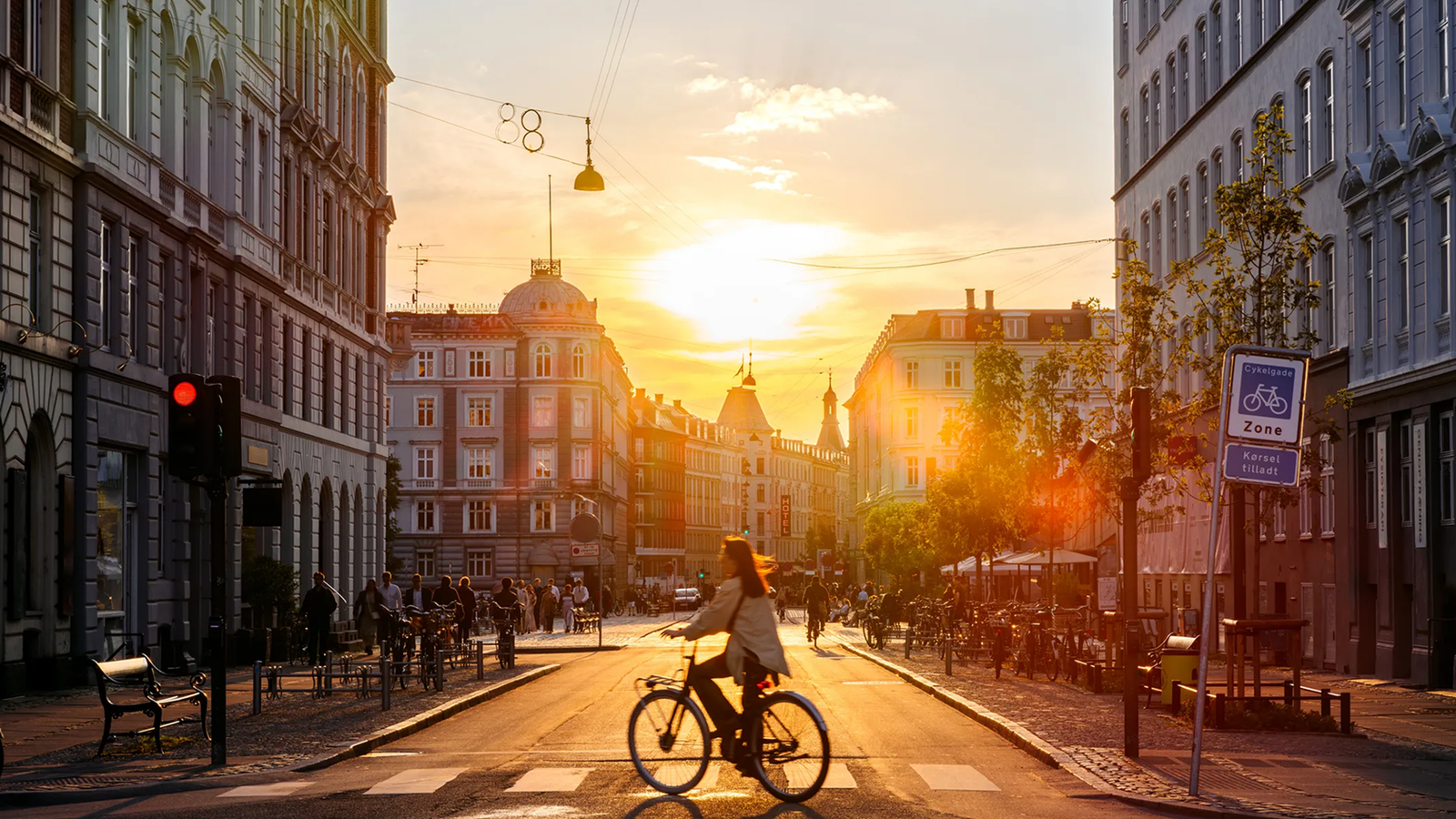
Denmark is a year-round destination, but the experience changes significantly with the seasons. Summer brings long daylight hours, lively coastal towns and ideal conditions for cycling, while autumn offers colorful landscapes and a quieter atmosphere.
Winter is perfect for cozy cafés, museums and festive experiences, while spring brings longer days, blooming gardens and increasingly comfortable weather.
The best time to visit Denmark ultimately depends on what you want to do. Whether you’re planning a city break in Copenhagen, a road trip through Jutland or a cycling holiday around the Danish islands, this month-by-month guide can help you choose the right season.
Denmark in January
January is one of the coldest and darkest months in Denmark.
Days are short, temperatures are generally low and coastal areas can be windy. Snow is possible, although conditions vary from year to year.
Despite the weather, January can be an interesting time for a Copenhagen city break. Museums, galleries, cafés and restaurants provide plenty of indoor activities.
The quieter travel period can also make major attractions feel less crowded than during summer.
Best for: Museums, cafés, Copenhagen city breaks and winter atmosphere.
Denmark in February
February remains firmly within Denmark’s winter season.
Temperatures are generally cold and daylight hours are still relatively short. Outdoor sightseeing requires warm clothing, particularly if you’re planning to spend extended periods along the coast.
Copenhagen remains a good option because of its museums, restaurants, design attractions and indoor cultural experiences.
If you’re looking for a quieter Scandinavian city experience, February can work well.
Best for: City breaks, museums, restaurants and cultural travel.
Denmark in March
March marks the beginning of the transition toward spring.
The days become noticeably longer, although temperatures can still be cold and weather conditions can change quickly.
Outdoor attractions gradually become more enjoyable, particularly toward the end of the month.
Copenhagen is a good base for March travel, while destinations such as Roskilde and Helsingør can also be explored as day trips.
Best for: Sightseeing, museums, historic attractions and early spring travel.
Denmark in April
April brings more obvious signs of spring.
Temperatures gradually rise and daylight hours increase, making it easier to spend time outdoors.
Parks and gardens begin to come alive, and walking through Copenhagen’s neighborhoods becomes more enjoyable.
This is also a useful month for exploring historic towns and castles without the crowds associated with the summer season.
Weather can still be unpredictable, so packing layers and a waterproof jacket is recommended.
Best for: City sightseeing, castles, gardens and photography.
Denmark in May
May is one of the most pleasant months for exploring Denmark.
Longer daylight hours make it easier to combine several attractions in a single day.
The weather is generally more comfortable for cycling, walking and exploring coastal areas.
Copenhagen becomes particularly enjoyable during this period, while destinations such as Odense, Aarhus and Roskilde can also be comfortably explored.
Best for: Cycling, sightseeing, road trips and outdoor activities.
Denmark in June
June marks the beginning of Denmark’s summer season.
The days are very long, giving travelers plenty of time to explore cities and countryside.
Outdoor cafés, parks and waterfront areas become livelier, while cycling and coastal activities become increasingly popular.
June is also a good month for exploring destinations such as Skagen, Bornholm and Møns Klint.
Best for: Cycling, coastal trips, outdoor activities and sightseeing.
Denmark in July
July is one of Denmark’s busiest travel months.
Temperatures are generally among the warmest of the year, and long daylight hours make it possible to spend most of the day outdoors.
Coastal towns and beaches become particularly popular.
Copenhagen is lively during this period, while destinations such as Skagen, Bornholm and the Danish islands attract travelers looking for outdoor experiences.
Because July is part of the main travel season, popular accommodation can fill quickly.
Best for: Beaches, cycling, islands, festivals and outdoor activities.
Denmark in August
August continues the summer travel season.
The weather remains suitable for outdoor activities, although conditions can vary.
It’s a good month for exploring Denmark’s coastline, visiting islands and taking road trips through the countryside.
Copenhagen, Aarhus and other major cities remain lively, while smaller coastal destinations can be busy during weekends.
If you’re traveling during August, booking accommodation and popular experiences ahead of time is a good idea.
Best for: Coastal holidays, cycling, road trips and sightseeing.
Denmark in September
September is one of the most comfortable months for exploring Denmark.
The summer crowds begin to decrease while the weather can remain pleasant for sightseeing and outdoor activities.
The countryside starts showing early signs of autumn, creating beautiful conditions for photography.
Cycling remains possible, although temperatures gradually become cooler as the month progresses.
Best for: City breaks, cycling, photography and countryside trips.
Denmark in October
October brings a noticeable shift toward autumn.
Trees develop warmer colors, temperatures become cooler and daylight hours begin to shorten.
The month is particularly appealing for travelers who enjoy autumn landscapes, museums, cafés and historic towns.
Copenhagen remains a strong destination, while countryside destinations can provide beautiful autumn scenery.
Bring layers and waterproof clothing because rain becomes more likely.
Best for: Autumn photography, museums, cafés and cultural travel.
Denmark in November
November is one of Denmark’s quieter months.
Temperatures drop, daylight hours become shorter and outdoor sightseeing becomes more weather-dependent.
However, this can be a good time to experience Denmark’s cozy indoor culture.
Spend time in cafés, explore museums, visit galleries and discover Copenhagen’s neighborhoods.
Travelers looking for a slower city break may appreciate the quieter atmosphere.
Best for: Museums, cafés, restaurants and city breaks.
Denmark in December
December brings a festive atmosphere to Denmark.
Copenhagen and other Danish cities are decorated for the holiday season, and Christmas markets become popular attractions.
The weather is generally cold, with short daylight hours, so plan a mixture of indoor and outdoor activities.
This is also a good time to experience Danish cafés, traditional food and the country’s famous cozy winter atmosphere.
Best for: Christmas markets, winter culture, cafés and festive travel.
Best Months to Visit Denmark
If you’re trying to decide quickly, here’s a simple breakdown.
Best Overall: May to September
These months generally offer the most convenient conditions for sightseeing, cycling, outdoor activities and exploring Denmark’s coast.
Best for Warm Weather: July and August
These are among the warmest months, although popular destinations can be busy.
Best for Fewer Crowds: April, May and September
These shoulder-season months can provide a good balance between comfortable conditions and a quieter travel experience.
Best for Cycling: May to September
Longer daylight hours and generally milder conditions make this the most convenient period for cycling trips.
Best for Christmas Atmosphere: December
December brings festive decorations, Christmas markets and a distinctly Scandinavian winter atmosphere.
Best for Museums and City Breaks: November to March
The colder months are well suited to Copenhagen’s museums, galleries, restaurants, cafés and cultural attractions.
Best Time to Visit Copenhagen
Copenhagen can be visited throughout the year.
May–June: Pleasant temperatures, long days and excellent conditions for exploring on foot or by bicycle.
July–August: Warmest period and lively outdoor atmosphere.
September: Comfortable sightseeing conditions with fewer peak-season crowds.
October–April: Better suited to museums, restaurants, cafés and cultural experiences.
If this is your first visit, late spring or early autumn provides a useful balance between outdoor sightseeing and manageable crowds.
Best Time to Visit Skagen
Skagen is particularly attractive during the warmer months.
From May through September, longer days make it easier to explore the beaches, coastal landscapes and nearby attractions.
Summer is the busiest period, while May and September can offer a quieter experience.
The weather can be windy at any time because of Skagen’s exposed coastal location, so bring an extra layer even during warmer months.
Best Time to Visit Bornholm
Bornholm is particularly well suited to summer travel.
June through August provides long days for cycling, hiking and exploring the island’s beaches and villages.
September can also be pleasant for travelers looking for a quieter experience.
The island’s outdoor attractions are less convenient during the colder months, particularly if cycling is a major part of your plans.
Best Time for Cycling in Denmark
Denmark is one of Europe’s most cycling-friendly countries, and the warmer months are the easiest time to explore by bicycle.
May to September generally offers the most convenient conditions.
Copenhagen is particularly easy to explore by bike, while destinations such as Bornholm, Funen and parts of Jutland offer longer cycling routes through countryside and coastal landscapes.
Always check the weather forecast before setting out, as wind and rain can affect cycling conditions.
Best Time for a Denmark Road Trip
For a road trip combining Copenhagen, Jutland, Funen and coastal destinations, May through September is generally the most convenient period.
A summer road trip could include:
- Copenhagen
- Roskilde
- Odense
- Aarhus
- Skagen
- Ribe
- Møns Klint
- The Wadden Sea
Spring and early autumn can also work well if you prefer cooler temperatures and a quieter travel experience.
Denmark Weather by Season
| Season | Weather | Best For |
|---|---|---|
| Spring | Cool to mild, increasingly longer days | Sightseeing, cycling, gardens |
| Summer | Mild to warm, long daylight hours | Beaches, islands, cycling |
| Autumn | Cool, changing foliage | Photography, cities, countryside |
| Winter | Cold, short daylight hours | Museums, cafés, Christmas |
What to Pack for Denmark
Your packing list should depend on the season, but some items are useful throughout the year.
Spring & Autumn
- Waterproof jacket
- Comfortable walking shoes
- Light layers
- Small umbrella
- Warm sweater
Summer
- Lightweight clothing
- Comfortable walking shoes
- Light jacket
- Sunglasses
- Rain jacket
Winter
- Warm coat
- Sweater
- Waterproof footwear
- Gloves
- Hat
- Scarf
Denmark’s weather can change quickly, so layers are useful even when visiting during the warmer months.
How Many Days Do You Need in Denmark?
For Copenhagen alone, 3–4 days is a good starting point.
For a broader Denmark trip, consider 7–10 days.
A longer itinerary could combine:
Days 1–3: Copenhagen
Day 4: Roskilde and Helsingør
Days 5–6: Odense and Funen
Day 7: Aarhus
Day 8: Skagen
Day 9: Ribe
Day 10: Wadden Sea
You can adjust the route depending on whether your priority is cities, history, nature or coastal travel.
Final Thoughts
Denmark is a destination that can be enjoyed throughout the year, but each season offers a different experience.
For cycling, coastal trips, outdoor sightseeing and long days, late spring and summer are the easiest choices.
For comfortable sightseeing and fewer crowds, May, June and September can be particularly appealing.
For museums, cafés, cultural attractions and Christmas experiences, the colder months offer a different side of Denmark.
If you’re planning your first trip, May through September provides the greatest flexibility for combining Copenhagen with Denmark’s countryside, castles, islands and coastal destinations.