
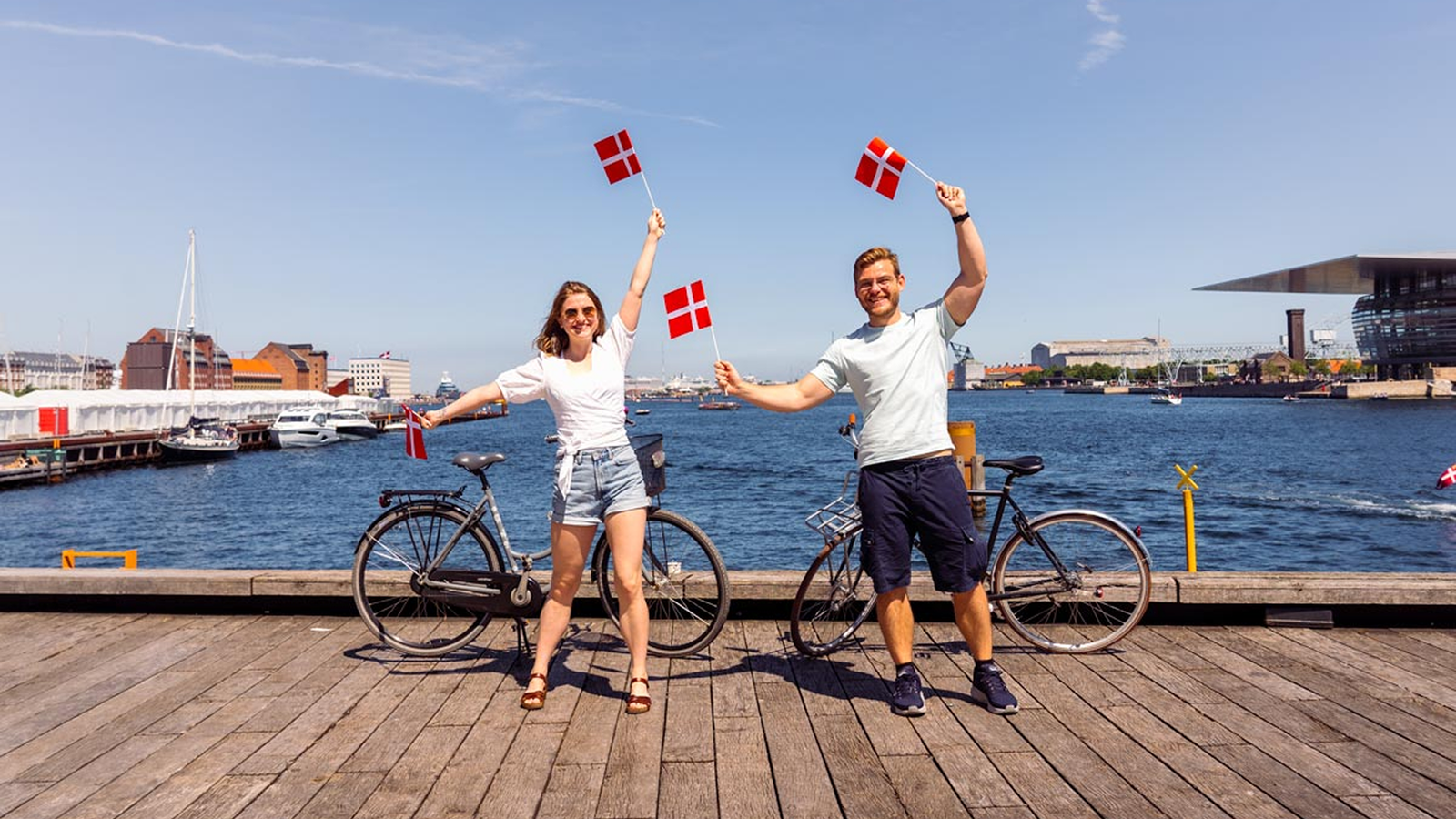
Denmark is an easy country to explore, making it a great choice for a first Scandinavian trip. In 10 days, you can experience Copenhagen’s historic streets, royal castles, Viking heritage, charming coastal towns, countryside landscapes and the distinctive atmosphere of Jutland.
This itinerary combines Copenhagen, Roskilde, Helsingør, Odense, Aarhus, Skagen and Ribe, giving you a balanced introduction to Denmark without trying to cover every corner of the country.
The route works particularly well for travelers interested in history, architecture, food, cycling, coastal scenery and Scandinavian culture.
Denmark at a Glance
Duration: 10 days
Best for: First-time visitors
Main destinations: Copenhagen, Roskilde, Helsingør, Odense, Aarhus, Skagen, Ribe
Travel style: Culture + history + cities + coast
Starting point: Copenhagen
Ending point: Copenhagen or Billund
Day 1 — Arrive in Copenhagen
Begin your Denmark trip in Copenhagen, the country’s capital.
After checking into your hotel, keep the first day relatively relaxed. Copenhagen is compact and easy to explore on foot, so you can get a feel for the city without trying to visit every attraction immediately.
Start around Nyhavn, the famous waterfront lined with colorful historic buildings.
From there, walk through the surrounding streets and explore the city’s central area.
Things to do
- Explore Nyhavn
- Walk along the waterfront
- Visit Kongens Nytorv
- Explore Strøget
- Stop at a traditional Danish café
- Enjoy your first Danish dinner
Evening
Take an evening walk around Nyhavn and the nearby historic streets.
Overnight: Copenhagen
Day 2 — Explore Copenhagen
Spend your second day discovering Copenhagen’s major attractions.
Start with Rosenborg Castle and the surrounding King’s Garden.
Continue toward Amalienborg Palace before walking toward the waterfront.
Later, visit the Little Mermaid and explore nearby Kastellet.
Things to do
- Rosenborg Castle
- King’s Garden
- Amalienborg Palace
- The Little Mermaid
- Kastellet
- Copenhagen waterfront
Evening
Spend the evening exploring one of Copenhagen’s neighborhoods, such as Vesterbro or Nørrebro.
Try traditional Danish food such as smørrebrød or a Danish pastry.
Overnight: Copenhagen
Day 3 — Copenhagen + Tivoli Gardens
Use your third day to experience another side of the capital.
Visit a museum or explore one of the city’s neighborhoods before spending the afternoon around Tivoli Gardens.
Tivoli combines gardens, attractions, restaurants and entertainment in the heart of Copenhagen.
You don’t have to spend the entire day there. Instead, use the afternoon and evening to enjoy the park at a relaxed pace.
Things to do
- Visit a Copenhagen museum
- Explore local neighborhoods
- Visit Tivoli Gardens
- Try Danish pastries
- Enjoy dinner in the city center
Overnight: Copenhagen
Day 4 — Roskilde and Helsingør
Leave Copenhagen for a day of Danish history.
Start in Roskilde, where you can visit Roskilde Cathedral and the Viking Ship Museum.
The Viking Ship Museum provides an opportunity to learn about Denmark’s maritime history and Viking heritage.
Later, continue toward Helsingør and visit Kronborg Castle, the Renaissance castle associated with Shakespeare’s Hamlet.
Things to do
- Roskilde Cathedral
- Viking Ship Museum
- Kronborg Castle
- Helsingør Old Town
- Coastal views
Return to Copenhagen in the evening or stay overnight in the region if you prefer a slower itinerary.
Overnight: Copenhagen or Helsingør
Day 5 — Copenhagen to Odense
Travel to Odense, located on the island of Funen.
Odense is closely connected with the famous Danish author Hans Christian Andersen.
Explore the historic center before visiting attractions connected with his life and work.
The city has a relaxed atmosphere and is much smaller than Copenhagen, making it easy to explore in a day.
Things to do
- Hans Christian Andersen Museum
- Historic Old Town
- Local cafés
- Odense Cathedral
- Parks and gardens
Evening
Enjoy dinner in central Odense and explore the streets around the historic center.
Overnight: Odense
Day 6 — Odense to Aarhus
Continue north toward Aarhus, Denmark’s second-largest city.
Aarhus has an interesting mix of historic architecture, modern design, museums and waterfront areas.
Begin by exploring Den Gamle By, the open-air museum showcasing different periods of Danish urban life.
Later, visit ARoS Aarhus Art Museum and explore the surrounding city center.
Things to do
- Den Gamle By
- ARoS Aarhus Art Museum
- Aarhus Cathedral
- Latin Quarter
- Aarhus waterfront
Evening
Explore Aarhus’s restaurant scene and try another Danish specialty.
Overnight: Aarhus
Day 7 — Aarhus to Skagen
Travel north toward Skagen, one of Denmark’s most distinctive coastal destinations.
Skagen is known for its sandy beaches, yellow houses and artistic heritage.
After arriving, explore the town before heading toward Grenen, the northern tip of Jutland.
This is where the waters of the North Sea and Kattegat meet.
Things to do
- Explore Skagen
- Visit Grenen
- Walk along the coast
- Discover local galleries
- Explore traditional architecture
Evening
Enjoy a seafood dinner and spend the evening around Skagen’s harbor.
Overnight: Skagen
Day 8 — Skagen to Ribe
Leave northern Jutland and travel toward Ribe, one of Denmark’s oldest towns.
Ribe’s historic center is filled with cobbled streets, traditional buildings and medieval architecture.
Spend the afternoon walking through the town and visiting Ribe Cathedral.
If time allows, explore the surrounding Wadden Sea region.
Things to do
- Ribe Old Town
- Ribe Cathedral
- Medieval streets
- Local cafés
- Wadden Sea area
Overnight: Ribe
Day 9 — Explore the Wadden Sea and Return East
Spend the morning exploring the Danish Wadden Sea.
The area is known for its tidal landscapes and important bird habitats.
Depending on the season, guided nature experiences can provide a closer look at the region’s wildlife.
Later, begin your journey back toward Copenhagen.
If you prefer a slower itinerary, you can break the journey with an overnight stay along the way.
Things to do
- Explore the Wadden Sea
- Join a nature walk
- Enjoy coastal scenery
- Travel toward Copenhagen
Overnight: Copenhagen
Day 10 — Final Day in Copenhagen
Return to Copenhagen for your final day.
Use the day to visit anything you missed earlier in the trip or simply enjoy the city at a slower pace.
You could explore a neighborhood, visit a museum, shop for Danish design products or spend time at a local café.
Things to do
- Visit a museum
- Explore Nørrebro or Vesterbro
- Shop for Danish design
- Enjoy a final Danish lunch
- Walk along the waterfront
Then head to Copenhagen Airport or continue your Scandinavian journey.
10-Day Denmark Itinerary at a Glance
| Day | Destination | Main Experiences |
|---|---|---|
| Day 1 | Copenhagen | Nyhavn, city center, waterfront |
| Day 2 | Copenhagen | Rosenborg, Amalienborg, Little Mermaid |
| Day 3 | Copenhagen | Museums, Tivoli Gardens |
| Day 4 | Roskilde + Helsingør | Vikings, cathedral, Kronborg Castle |
| Day 5 | Odense | Hans Christian Andersen, historic center |
| Day 6 | Aarhus | Den Gamle By, ARoS |
| Day 7 | Skagen | Grenen, beaches, coastal scenery |
| Day 8 | Ribe | Medieval town, cathedral |
| Day 9 | Wadden Sea + Copenhagen | Nature, wildlife, return |
| Day 10 | Copenhagen | Shopping, museums, departure |
Where to Stay During This Denmark Itinerary
You don’t need to change hotels every night.
A practical approach is to use several bases.
Copenhagen — 4 Nights
Stay in Copenhagen for the first three nights and return for your final night.
Popular areas include:
- Indre By
- Nyhavn
- Vesterbro
- Nørrebro
- Christianshavn
Odense — 1 Night
Staying near the city center makes it easy to explore the historic areas.
Aarhus — 1 Night
Stay close to the city center so you can easily reach museums, restaurants and attractions.
Skagen — 1 Night
Staying near the center or harbor makes exploring the town convenient.
Ribe — 1 Night
A central location allows you to experience the historic town after the day-trippers leave.
How to Travel Around Denmark
Denmark is relatively easy to navigate.
Train
Trains are particularly useful for connecting major cities such as Copenhagen, Odense and Aarhus.
Bus
Buses can be useful for destinations where rail connections are less direct.
Car
A rental car provides greater flexibility for exploring Skagen, Ribe, the Wadden Sea and smaller towns.
For this itinerary, a combination of trains and a rental car can work well.
Bicycle
Cycling is an important part of Danish culture, and many cities have excellent cycling infrastructure.
Consider renting a bicycle for a day in Copenhagen or exploring Bornholm on a separate trip.
Best Time for This Denmark Itinerary
The most convenient period for this itinerary is generally May through September.
May–June
- Longer daylight hours
- Comfortable sightseeing conditions
- Good for cycling
- Pleasant coastal weather
July–August
- Warmest period
- Excellent for coastal destinations
- Long daylight hours
- More visitors
September
- Cooler but generally comfortable
- Good for sightseeing
- Quieter than peak summer
The colder months can still work, but outdoor attractions and coastal destinations become more weather-dependent.
What to Eat During Your Denmark Trip
Make food part of the itinerary rather than treating it as an afterthought.
Try:
- Smørrebrød
- Stegt flæsk
- Frikadeller
- Fiskefrikadeller
- Flæskesteg
- Danish pastries
- Kanelsnegle
- Fresh seafood
- Danish cheese
In Copenhagen and Aarhus, you’ll find both traditional Danish restaurants and modern Nordic cuisine.
In Skagen and other coastal destinations, seafood is a natural choice.
Denmark Travel Tips
Book accommodation in advance
Summer is the busiest period, particularly in Copenhagen and popular coastal destinations.
Don’t rush Copenhagen
The capital has enough attractions to fill several days, so avoid treating it only as a transit point.
Check transportation schedules
Some regional connections and attractions can have seasonal schedules.
Pack layers
Danish weather can change quickly, especially along the coast.
Bring comfortable shoes
Several parts of this itinerary involve walking through historic towns and outdoor attractions.
Consider a travel pass
If you’re using trains extensively, compare individual fares with available rail passes before booking.
Can You See Denmark in 10 Days?
Ten days gives you enough time to experience several different sides of Denmark without moving every day.
This itinerary combines:
- Capital-city culture
- Royal history
- Viking heritage
- Scandinavian design
- Coastal landscapes
- Medieval towns
- Art
- Danish food
- Nature
If you prefer slower travel, remove one or two destinations and spend additional time in Copenhagen, Aarhus or the Danish countryside.
Final Thoughts
A 10-day trip through Denmark can take you far beyond Copenhagen.
You’ll begin with the colorful waterfronts and historic attractions of the capital, discover Viking heritage in Roskilde, explore Hans Christian Andersen’s hometown in Odense, experience the cultural scene of Aarhus, visit the northern coastline of Skagen and finish among the medieval streets of Ribe.
The route provides a balanced introduction to Denmark’s cities, history, food, architecture and natural landscapes.
If this is your first visit, allow yourself enough flexibility to slow down occasionally. Some of the best Danish travel experiences can come from something as simple as a quiet café, a coastal walk or cycling through a small town.