Morocco is a country made for road trips. In just 10 days, you can explore colorful medinas, ancient kasbahs, dramatic mountain landscapes, traditional villages, and the vast Sahara Desert.
For a first trip, it is tempting to visit as many places as possible, but Morocco is better enjoyed at a slower pace. This itinerary connects Marrakech, the Atlas Mountains, Aït Benhaddou, the Dades Valley, Merzouga, and Fes, giving you a good mix of culture, history, nature, and adventure.
Morocco at a Glance
Trip length: 10 days
Route: Marrakech → Aït Benhaddou → Dades Valley → Merzouga → Fes
Best for: First-time visitors, culture, history, road trips, photography, food, and adventure
Travel style: Road trip with a mixture of guided experiences and independent exploration
Day 1 — Arrive in Marrakech
Begin your Morocco trip in Marrakech.
After arriving, check into your hotel or riad and give yourself some time to settle in.
If you arrive early, start exploring the historic medina.
The narrow streets are filled with traditional shops, cafés, restaurants, markets, and historic buildings.
Things to do
- Explore the Marrakech medina
- Walk around Jemaa el-Fnaa
- Visit local markets
- Try traditional Moroccan food
- Enjoy mint tea at a rooftop café
Don’t try to see everything on your first afternoon. Marrakech can feel overwhelming at first, so take some time to simply walk around and get used to the atmosphere.
Where to stay
A traditional riad inside or close to the medina can be a great choice for your first experience in Marrakech.
Day 2 — Explore Marrakech
Spend your second day properly exploring Marrakech.
Start with some of the city’s historic attractions before the streets become busier.
You can visit the Bahia Palace, explore the surrounding medina, and spend time discovering traditional architecture.
Later, visit the Majorelle Garden if it fits your interests.
Afternoon
Return toward the medina and explore the souks.
You will find:
- Traditional textiles
- Leather goods
- Ceramics
- Spices
- Lamps
- Handcrafted products
Take your time when shopping and compare prices before making purchases.
Evening
Return to Jemaa el-Fnaa.
The square becomes particularly lively later in the day and is one of the most recognizable places in Marrakech.
Day 3 — Marrakech to Aït Benhaddou
Today begins the road-trip portion of your journey.
Travel from Marrakech toward Aït Benhaddou, crossing the High Atlas Mountains.
The journey itself is part of the experience.
As you leave Marrakech, the landscape gradually changes from city surroundings to mountains and valleys.
Stop along the way
Depending on your route and transportation, you can stop at viewpoints and small communities along the mountain roads.
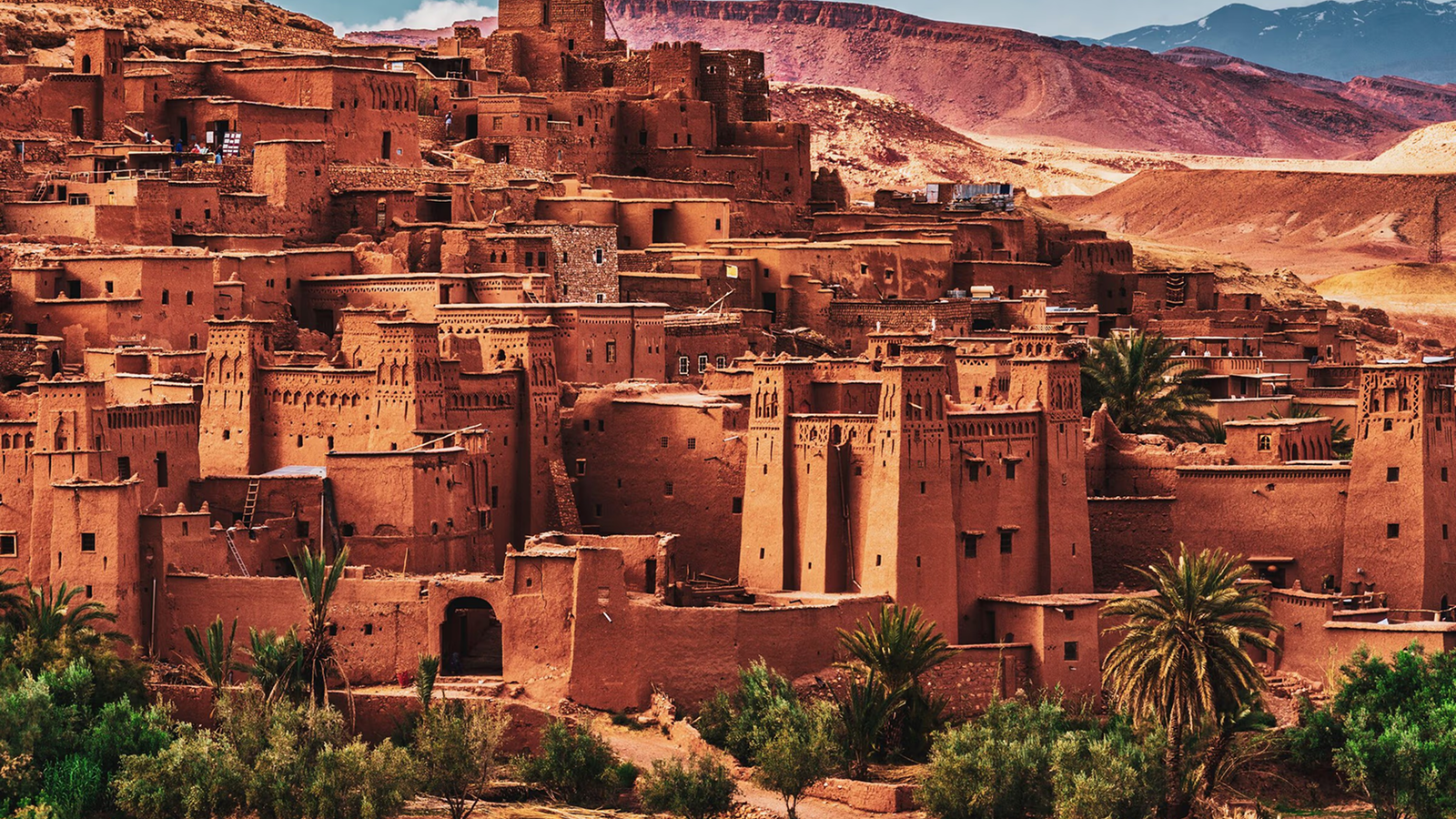
Once you reach Aït Benhaddou, explore the historic fortified settlement.
The traditional earthen buildings and narrow passages create one of Morocco’s most distinctive landscapes.
Evening
Stay overnight near Aït Benhaddou or in the surrounding area.
This allows you to enjoy the area without immediately continuing your journey.
Day 4 — Aït Benhaddou to Dades Valley
Continue east toward the Dades Valley.
The route passes through dramatic landscapes, traditional villages, valleys, and mountain scenery.
One of the most interesting aspects of traveling through this part of Morocco is how quickly the scenery changes.
Stop at Ouarzazate
Ouarzazate is often considered a gateway to southern Morocco and can make a useful stop during the journey.
You can explore the town or nearby attractions before continuing toward the Dades region.
Arrive in the Dades Valley
The valley is known for its rock formations, winding roads, and surrounding mountains.
Spend the evening enjoying the scenery and relaxing at your accommodation.
Day 5 — Dades Valley to Merzouga
Today is one of the most exciting travel days of the itinerary.
Continue toward Merzouga, the gateway to the Erg Chebbi dunes.
The landscape gradually becomes more arid as you approach the Sahara.
Along the way, you can stop at viewpoints, villages, and other scenic locations.
Arrive in Merzouga
Once you reach the desert region, prepare for your desert experience.
Depending on your accommodation and tour, you may travel into the dunes by camel or another organized transfer.
Sunset in the Sahara
Try to arrive in time for sunset.
Watching the sun disappear behind the dunes is one of the highlights of a Morocco trip.
Day 6 — Sahara Desert Experience
Wake up early for sunrise.
The desert looks completely different as the light changes across the dunes.
After breakfast, you can explore the surrounding area or return toward Merzouga.
Things to do
Depending on your chosen experience, you may be able to:
- Take a camel ride
- Explore the dunes
- Visit nearby communities
- Experience traditional music
- Enjoy a desert camp
- Watch sunrise and sunset
Don’t make this day too busy.
The Sahara is best experienced slowly. Spend time enjoying the landscape rather than trying to fill every hour with activities.
Day 7 — Merzouga to Fes
Today you leave the desert and travel north toward Fes.
It is a long travel day, so start early.
The route offers another major change in scenery as you move away from the desert and toward greener landscapes.
Depending on your route, you may pass through different mountain and countryside regions.
Arrive in Fes
Once you reach Fes, check into your accommodation and rest.
If you still have energy, take a short evening walk around the area near your hotel.
Save the main sightseeing for the following day.
Day 8 — Explore Fes
Fes is one of Morocco’s most important historic cities.
Its old medina is famous for narrow streets, traditional workshops, markets, historic buildings, and local food.
Spend the day exploring the medina on foot.
Things to see
- Fes el Bali
- Traditional markets
- Historic religious architecture
- Artisan workshops
- Chouara Tannery
- Local food markets
A guide can be useful because the medina is extremely complex and easy to get lost in.
Evening
Find a traditional restaurant and enjoy a relaxed Moroccan dinner.
Try dishes such as tagine, couscous, or pastilla.
Day 9 — Fes to Chefchaouen
Add a final change of scenery by traveling to Chefchaouen, the famous blue city in northern Morocco.
The town is surrounded by the Rif Mountains and is known for its blue-painted buildings and narrow streets.
Explore the old town
Spend the day walking through the medina.
Look for:
- Blue-painted streets
- Local craft shops
- Small cafés
- Mountain viewpoints
- Traditional architecture
Chefchaouen is a place where you don’t need a long list of attractions.
Simply walking through the streets and enjoying the atmosphere is part of the experience.
Evening
Stay overnight in Chefchaouen.
Day 10 — Return and Departure
Your final day depends on your departure arrangements.
If you are flying from Tangier, Chefchaouen can be a convenient final stop before continuing north.
If your flight leaves from Fes or Casablanca, allow plenty of time for the journey.
Avoid scheduling major sightseeing on your departure day.
If you have a late flight, use the morning for a relaxed breakfast, final shopping, or a final walk through Chefchaouen.
Alternative: Return to Marrakech
If your trip is a round trip from Marrakech, you can modify the itinerary.
Instead of finishing in Chefchaouen, spend your final days returning toward Marrakech.
A simpler route would be:
Marrakech → Aït Benhaddou → Dades Valley → Merzouga → Marrakech
This option reduces the amount of long-distance travel and works better if your flights are both from Marrakech.
Best Time for This Morocco Itinerary
Spring and autumn can be particularly comfortable for exploring Morocco’s cities, mountains, and desert regions.
Spring
Temperatures can be pleasant for sightseeing and road trips, while landscapes in some regions can be greener.
Summer
Temperatures can become extremely hot, especially in the desert and inland areas. Plan outdoor activities carefully and avoid the hottest parts of the day.
Autumn
Autumn can offer comfortable conditions for exploring cities and desert regions.
Winter
Winter can be pleasant in some cities during the daytime, but mountain and desert nights can become cold.
Always check conditions for each region because Morocco’s climate varies significantly between the coast, mountains, cities, and desert.
How to Travel Around Morocco
For this itinerary, there are several options.
Private Driver
A private driver is one of the easiest choices for a multi-day Morocco road trip.
You can stop along the route and avoid worrying about navigation and long-distance driving.
Organized Tour
A multi-day tour can be convenient if you prefer having transportation, accommodation, and sightseeing organized together.
Rental Car
Renting a car provides more independence, but mountain roads and long distances require careful planning.
Don’t underestimate driving times.
What to Eat Along the Way
Food is an important part of traveling through Morocco.
Try:
- Tagine
- Couscous
- Pastilla
- Harira
- Moroccan salads
- Gözleme-style local breads
- Dates
- Fresh fruit
- Mint tea
- Moroccan pastries
Food changes between regions, so ask locals what specialties are popular wherever you stop.
What to Pack for a Morocco Road Trip
Your packing list should account for different climates.
Bring:
- Comfortable walking shoes
- Lightweight clothing
- Warm layers
- Sun protection
- Sunglasses
- Reusable water bottle
- Small daypack
- Power bank
- Light jacket
For the Sahara, bring a warmer layer for the evening. Desert temperatures can drop considerably after sunset.
Morocco Travel Tips
Don’t underestimate travel time
The distances between destinations can be significant, particularly when traveling through mountains.
Start early
Early starts help you make the most of sightseeing and avoid spending your entire day traveling.
Carry some cash
Smaller shops, cafés, and local businesses may not always accept cards.
Respect local customs
Dress respectfully, particularly when visiting religious or traditional areas.
Stay in a riad
A traditional riad can make your Morocco trip feel much more connected to local architecture and hospitality.
Don’t overpack your itinerary
Morocco is a destination where the journey itself is part of the experience.
Leave time to stop, take photographs, drink tea, and explore places that aren’t necessarily on your original plan.
Final Thoughts
A 10-day Morocco trip can take you through an incredible range of landscapes and experiences.
Starting in Marrakech, you can cross the Atlas Mountains, explore Aït Benhaddou, travel through the Dades Valley, spend a night beneath the Sahara sky, and continue toward the historic streets of Fes.
Adding Chefchaouen at the end gives the journey another completely different atmosphere.
The route involves some long travel days, so don’t try to rush through every destination. Give yourself enough time to enjoy the landscapes between cities as well as the attractions themselves.
Morocco is at its best when you slow down and experience the journey — one medina, mountain road, desert sunset, and traditional meal at a time.